


Speaking in an interview reviewing the Oil Ministry’s performance over the past two years, Paknejad said the ministry continued development projects while managing the country’s strategic reserves, production imbalances, and challenges in the South Pars gas field.
“After the end of the 12-day war [in June 2025], the country was in a special situation, but while continuing to manage the crisis, we pursued plans to increase oil and gas production with determination.”
“Fortunately, during the period following the 12-day war, we obtained all the necessary approvals and put the project into operation. So far, we have practically achieved around 70,000 to 80,000 barrels per day of that 250,000-barrel capacity,” he noted.
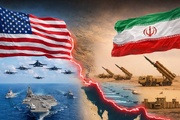
The minister said the oil industry faced significant challenges during the recent US-Israeli aggression, which began on February 28, including attacks on oil storage facilities and loading infrastructure.
“During the 40-day war, the oil industry suffered further damage. On March 8, Tehran’s oil storage facilities were attacked again. In addition to the main storage facilities, the loading facilities were also targeted. At the same time, one of the oil storage facilities in Alborz province was hit, creating a very worrying situation,” Paknejad said.
He also recalled attacks on four gas refineries in the Asaluyeh area.
Paknejad said technical expertise within the National Iranian Gas Company and the National Iranian Oil Company enabled the industry to quickly restore part of its lost capacity.
“We were able to restore parts of the lost capacity within a short period, in just a matter of hours. A significant portion of production capacity has now been restored, and the process is continuing,” he said.
The oil minister said petrochemical facilities in Mahshahr and Asaluyeh also came under attack, with utility units supplying steam, electricity and nitrogen to processing facilities among the targets.
“However, through cooperation with other government bodies, particularly the Ministry of Energy, the necessary plans were made during the war through joint meetings, and the situation was largely managed,” Paknejad said.
MNA





Your Comment