


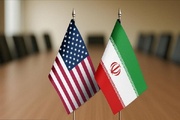
In an interview with local Iranian media on Saturday, Baghaei detailed the current status of the Iran-US memorandum of understanding, the reasons behind its suspension, regional developments, and Tehran’s diplomatic approach. He said Iran has never been the first party to violate an agreement, noting that, as with the 2015 nuclear deal (JCPOA), it was the United States that first broke its commitments under the new memorandum.
He emphasized that the agreement was based on reciprocal implementation of commitments, arguing that no country can be expected to uphold its obligations unilaterally while the other side fails to do the same. As a result, he said, implementation of the memorandum has effectively been suspended.
Addressing the section of the agreement concerning the Strait of Hormuz, Baghaei said the text clearly stipulated that Iran, in consultation with Oman and through dialogue with regional states, would be responsible for developing future mechanisms for managing the strategic waterway. He stressed that the memorandum contained no provision allowing the United States to establish an independent shipping route or assume a separate management role in the strait.
According to Baghaei, the agreement envisioned a 30-day period to restore normal shipping conditions and implement safe navigation mechanisms. However, before that period expired, the United States launched military operations against Iran, preventing the agreement from being carried out and bypassing the coordinated shipping routes established with Tehran.
He said Iran’s measures in the Strait of Hormuz were taken in line with its responsibility to safeguard maritime security and prevent the waterway from being used for military operations against the country, adding that, under international law, Iran has the right as a littoral state to take the necessary measures to protect its national security.
Turning to Lebanon, Baghaei said Tehran had insisted that ending the conflict there be included in the memorandum and had agreed to establish a joint de-confliction mechanism involving Iran, the United States, Lebanon, Qatar, and Pakistan. He argued that the implementation of this part of the agreement was also undermined by Washington’s actions.
The spokesperson further claimed that competing factions within the U.S. political establishment were obstructing the implementation of commitments accepted by the American government itself. He described the current U.S. governing structure as “fragmented and divided,” saying different centers of power and lobbying groups pursue conflicting agendas, resulting in contradictory messages to the international community and making engagement with Washington increasingly difficult.
On Iran’s frozen assets, Baghaei said the United States had committed to restoring Iran’s access to all of its blocked funds. Under the first phase of the agreement, he said, $12 billion was to be released in two installments of $6 billion each. However, the suspension of the memorandum halted the entire process.
He stressed that these were Iran’s own financial assets and not funds to be paid by the United States, but rather money that had been frozen for years and which Washington had agreed to make accessible.
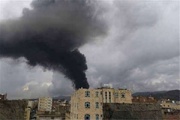
Baghaei also condemned attacks on civilian sites, critical infrastructure, cultural landmarks, and historical heritage in Iran, describing them as violations of the UN Charter and international humanitarian law, as well as acts amounting to war crimes and crimes against humanity.
Reflecting on previous negotiations, including the JCPOA, he said Iran has never walked away from diplomacy and has consistently negotiated in good faith. Nevertheless, he argued that Washington’s withdrawal from the nuclear deal and its alleged violation of the latest memorandum have deepened Iran’s distrust of US commitments.
He added that the 14-clause memorandum had been drafted with exceptional precision to eliminate ambiguities and prevent differing interpretations, while its implementation was strictly based on the principle of reciprocal commitments.








Your Comment