


The recent 40‑day war should be regarded as one of the decisive turning points in the security equations of West Asia – an event that not only tangibly shifted the balance of power but also confronted the theoretical and practical foundations of Israel's security doctrine with an unprecedented challenge. To understand the depth of this transformation, we must understand the essence of this doctrine – a doctrine that, since the establishment of the Israeli regime, has rested on three main pillars: deterrence through absolute military superiority, transferring the battlefield beyond the borders, and preemptive destruction of threats before they materialize into actual danger. The recent war, however, showed that these three pillars no longer possess their former solidity.
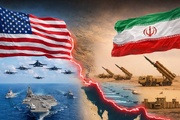
Within this framework, the direct entry of the United States and Israel into confrontation with Iran not only failed to lead to the achievement of their declared objectives but effectively turned into an arena where the limits of their power were exposed. What was supposed to be a limited, swift, and decisive operation turned into a war of attrition that yielded no clear strategic gain for Tel Aviv and Washington, while imposing considerable political, military, and psychological costs on them. This was the first sign of a crack in Israel's security doctrine – a doctrine that had always emphasized "swift and decisive victory" and shunned entering prolonged wars.
From an operational perspective, one of the most important objectives of this war was to weaken Iran's vital infrastructure and disrupt its strategic capabilities. However, not only was such an objective not achieved, but Iran's vital structures were able to adapt to wartime conditions while maintaining their cohesion. This indicates a level of resilience and flexibility that had not been properly understood in the adversary's initial calculations. In fact, one of the main miscalculations of the US and Israel was their incorrect assessment of Iran's internal capacities and its level of preparedness for a large‑scale conflict.
At the strategic level, the broader goal of this confrontation was to weaken or even collapse the Axis of Resistance as a regional network of actors aligned with Iran. This project also failed. Contrary to the war planners' expectations, not only did this axis not disintegrate, but in many cases, we witnessed increased coordination and cohesion among its components. Various fronts in the region, from Lebanon to other locations, remained active and imposed a kind of multi‑layered pressure on Israel. This dynamic showed that the notion of "destroying the chain of resistance" was more of a political wish than an operational strategy.
On the other hand, one of the important pillars of Israel's security doctrine has been creating a kind of psychological superiority and an image of invincibility in the minds of its enemies and even global public opinion. Over the past decades, this image has played a significant role in indirect deterrence. But the recent 40‑day war severely distorted this image. The prolongation of the conflict, the failure to achieve declared objectives, and the continued capabilities of the opposing side all contributed to the erosion of this psychological superiority. When an actor cannot deliver on its promises on the battlefield, its strategic credibility gradually erodes as well.
Another important point is the role of the United States in this confrontation. Washington, long known as the ultimate guarantor of Israel's security, not only failed to shift the equation in favor of its ally in this war but also saw its own credibility eroded. The failure to achieve objectives showed that even direct US intervention does not necessarily mean a swift and decisive victory. This could have long‑term consequences for the region's security equations and even the international system, because the credibility of great powers is one of the key components shaping the behavior of other actors.
At the regional level, the consequences of this war extended beyond a bilateral conflict. Many regional actors have been closely monitoring developments and are recalibrating their calculations based on the outcome. When Israel, despite enjoying broad US support, cannot achieve its objectives, the message conveyed to other actors is that the balance of power is changing. This change does not necessarily mean absolute superiority for one side, but rather indicates a movement toward a more complex and multi‑layered balance.
In the meantime, Iran, by employing a combination of military, political, and media tools, not only managed to defend its position but also seized the initiative in some areas. The simultaneous management of different dimensions of the war – from the battlefield to diplomacy – demonstrates strategic maturity in dealing with complex crises. This experience can be considered a new model for confronting hybrid threats.
What matters most is that the 40‑day war is not merely an isolated event, but part of a long‑term process of shifting the balance of power in the region. The collapse or weakening of Israel's security doctrine does not mean that the regime is no longer capable of military action; rather, it means that its traditional decision‑making and strategic frameworks are no longer adequate for the new circumstances. In such a situation, Israel is compelled to reassess its assumptions – a reassessment that may be time‑consuming and costly.
In conclusion, it can be said that the recent 40‑day war was more a strategic test than a military battle – a test in which Israel's security doctrine encountered new realities that had previously received little attention. Failure to achieve objectives, inability to weaken Iran and the Axis of Resistance, and the erosion of psychological superiority are all signs of a deeper transformation. A transformation that, although still in its early stages, could fundamentally reshape the form and nature of the region's security equations in the coming years.
MNA


















Your Comment