

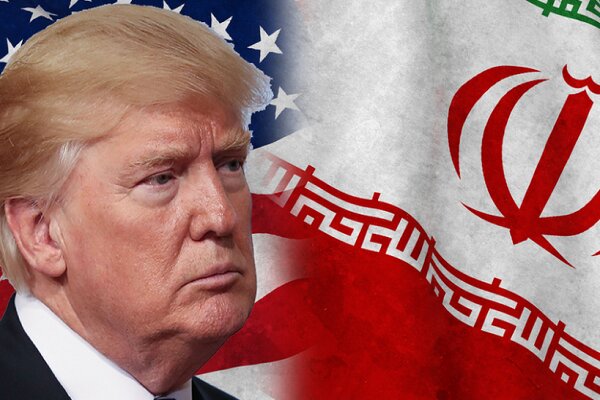
In today’s tense environment, some voices in Washington are once again speaking of the military option against Iran. It is as if the experience of the past two decades has been pushed aside, and America’s strategic memory has lapsed. Military action may appear simple in think tanks, but the field of reality has always behaved differently. Before any decision is made, it is necessary to look back and see what U.S. military interventions in the region have achieved and what costs they have imposed on this country.
After the September 11 attacks, the United States marched into Afghanistan under the pretext of fighting terrorism. The Taliban government collapsed in a short period of time, and the perception of a swift victory took shape. But what followed was a war of attrition that lasted twenty years. Thousands of American soldiers were killed or wounded, and hundreds of billions of dollars were spent. In the end, Washington was forced to negotiate with the same Taliban and, in a scene that still remains in global memory, hastily withdrew its forces from Kabul and handed power back to the Taliban. This was the end of a costly war that produced no clear strategic achievement for the United States.
In Iraq as well, a similar scenario was repeated. The United States attacked that country on the pretext of eliminating weapons of mass destruction and overthrowing Saddam’s government. But after the fall of Baghdad, it entered a phase of instability and internal conflict that lasted for years. The human and financial costs of this war were also heavy and called America’s international legitimacy into question. More importantly, the new political structure of Iraq took shape in a way that established close relations with Iran. The final result for Washington was not a country that became a reliable base for its influence, but an Iraq that, in many regional equations, moved closer to Tehran.
These two experiences show that a war against a country does not mean a lasting victory. In Afghanistan and Iraq, the United States confronted the reality that military power, however extensive, cannot by itself shape the political future of a nation. The question now is why some imagine that Iran would be an easier target than those two countries.
Iran is not an easy rival
Iran is a country with a significant population and a consolidated political structure. Four decades of pressure and sanctions have pushed this country toward strengthening internal capabilities and developing deterrent tools. Iran’s missile power and its strategic depth in the region are part of this reality. Any military action against such a country will be met with a response that can expand the scope of the conflict. The notion of a short, low-cost war against Iran is not compatible with realities on the ground.
Iran is not merely a geography; it possesses a network of political and security relationships in the region. These ties mean that any direct confrontation can take on broader dimensions. In Afghanistan and Iraq, the United States faced groups that, in terms of military capability, were not comparable to an established state, yet even those wars turned into prolonged quagmires. Now the discussion is about confronting a country that has a cohesive defensive structure and long experience in crisis management. Such a confrontation can generate costs far beyond initial estimates.
From an economic perspective as well, the United States faces numerous internal challenges. High public debt and deep social divisions have made the domestic environment vulnerable. Entering a new war demands enormous financial resources and imposes additional pressure on the economy. The experience of the two previous wars showed that even America’s large economy is not immune to the consequences of long wars. At a time when competition with other great powers is a priority of Washington’s foreign policy, opening a new front in West Asia can disrupt America’s strategic focus.
It must also be noted that American public opinion is no longer as receptive to distant wars as it was two decades ago. The memory of returning coffins and endless costs still lingers in the public mind. Any decision to attack Iran will face serious questions within the United States. American politicians must explain what the ultimate objective is and how they intend to prevent a repetition of the Afghanistan and Iraq scenarios.
Iran has shown that in the face of external pressure, it adopts an approach of resistance. Extensive sanctions failed to force this country into submission and instead led to the development of indigenous capacities. Therefore, expecting that a military attack could break Iran’s political will is inconsistent with past experiences. Any direct confrontation increases the likelihood of a war of attrition, from which exit would be difficult for the United States.
Today’s warning is an invitation to reconsider calculations. If the United States seeks regional stability and the preservation of its interests, it must draw on the bitter lessons of the past. Afghanistan showed that overthrowing a government is the beginning of a long and costly path. Iraq showed that regime change does not necessarily lead to the formation of an obedient ally. A war with Iran could be more complex and more costly than both experiences. Iran is the largest rival the United States would face in the region, and testing strength against such a rival carries unpredictable consequences.
Ultimately, strategic rationality dictates that the path of diplomacy and dialogue be preferred over the military option. Today’s world needs stability more than ever, and a new war would only add to instability. By learning from the past, the United States can avoid entering another crisis. An attack on Iran would neither create a new honor for Washington nor bring lasting security. What is likely is a repetition of a cycle of cost and attrition, from which exit would take years. The wise decision is that this cycle should not begin at all.
MNA
Your Comment