


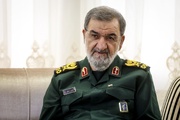
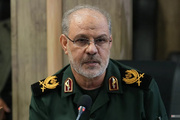
Speaking in an unveiling ceremony of the War Room and new Studio of IRGC Public Relations Office in Tehran, he noted that media’s strategic role is a complex, professional, and multidimensional task that focuses on shaping public opinion, building war narrative, and discrediting the enemy's narrative.
Referring to the brilliant performance of the media during the 12-day Israeli imposed war against Iran. Brigadier General Naeini stressed that media played an outstanding role in the 12-day Sacred Defense in three key areas: strengthening national morale, bolstering combat morale, and confronting enemy’s psychological warfare.
Elsewhere in his remarks, the IRGC spokesman pointed to the enemy’s attack on the Islamic Republic of Iran Broadcasting (IRIB)’s building, emphasizing that Israeli attack on IRIB’s building is a sign of helplessness and a definitive frustration of the enemy.
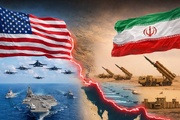
On June 13, the Zionist regime launched an unprovoked war of aggression against Iran, targeting military, nuclear, and residential areas for 12 consecutive days. The United States later escalated the conflict by striking three of Iran’s nuclear sites in Natanz, Fordow, and Isfahan on June 22.
Iran’s Armed Forces delivered an immediate and forceful response. The IRGC Aerospace Force carried out 22 waves of retaliatory missile strikes under Operation True Promise III, inflicting significant damage and heavy losses on cities across the occupied territories.
In retaliation for the US attacks, Iranian forces also targeted al-Udeid Air Base in Qatar —the largest American military installation in West Asia— with a barrage of missiles.
The confrontation came to an end on June 24, when a ceasefire was enforced.
MA/6618670




Your Comment