


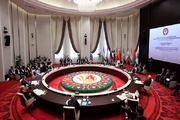
Al Jazeera, referring to the Arab and Islamic leaders’ summit on Monday in Doha, Qatar, reported that these countries are waiting for practical decisions to be taken against the Israeli regime at this meeting, with pressure on its allies being the main scenario under consideration.
Referring to the summit of Arab and Islamic leaders scheduled to be held later today in Doha, Al Jazeera wrote that the Arab and Islamic world, both before the summit and following Israel’s attack on Qatar, is eager to see how this summit will differ from previous ones.
The network added that Doha is determined that this meeting should not resemble previous summits and that practical positions should be adopted.
Al Jazeera then outlined the scenarios under consideration at the Doha summit, including: condemnation and expressing outrage, halting the normalization process, severing economic, commercial, and cultural relations, an international campaign to condemn the Israeli regime, pressure on Tel Aviv’s allies, activating joint Arab and Islamic defense, supporting Qatar’s mediation efforts, and stopping the Gaza war.
The media outlet described halting the normalization process as an effective and painful lever against the Israeli regime, especially given that part of its regional strategy is based on strengthening and expanding normalization in the region.
Regarding the option of severing economic, commercial, and cultural relations, Al Jazeera wrote that this includes sanctioning Israel and the companies cooperating with it, which could place Tel Aviv under an economic blockade, including blocking ships heading to the occupied territories and canceling economic agreements signed between certain Arab and Islamic countries and Israel. If successful, it would have a strong impact on Israel’s economy.
The network also described an international campaign to condemn the Zionist regime as significant, considering the positions of countries and prominent politicians worldwide, from North America to Europe and Africa, and the waves of opposition to the Tel Aviv regime’s actions. It also considered the option of pressuring Tel Aviv’s allies, including the United States, as important.
Regarding the scenario of activating joint Arab and Islamic defense, Al Jazeera, referring to recent Israeli attacks on Yemen, Iran, and Qatar, wrote that this includes strengthening security cooperation to counter common threats and protect territories and airspace, especially against any violations of the airspace of Arab and Islamic countries.
It added that without a doubt, Arab and Islamic countries have many levers in this regard. In this context, Iraqi Prime Minister Mohammed Shia’ Al Sudani said that Arab and Islamic countries have numerous pressure tools that they can use to stop Israeli attacks.
Al Jazeera added that, in any case, Arab and Islamic countries are eagerly awaiting decisions that can be effectively implemented, including applying international pressure to stop Israeli aggression, ending famine and hunger in Gaza, opening the Rafah crossing, applying international pressure to allow humanitarian aid into the area under Arab and Islamic military protection, and starting Gaza’s reconstruction process.
The network wrote that despite the multiplicity of these options, military confrontation with Israel is, according to observers, the least likely option. Political, diplomatic, and economic levers are the most prominent options being considered at the Doha summit.
MNA/IRN85939271






Your Comment