


Renowned master of pottery of the northeastern province of Khorasan Razavi Mohammad Ali Fazlinejad is a famous name for the fans of the craft; after 30 years of love affair with pottery and clay, now the master craftsman has only brought to halt by the old age and a heart attack.
He was born in a village near Neishabour in 1941. He was awarded an honorary MA in pottery. Since childhood, when he was working in the farm helping his father, Fazlinejad loved mud and clay.
This interest lured him to visual art works and in 1956 was learning art of pottery and designing geometric shapes under the auspices of Mansour Davanlou in the Center of Visual Arts in the then Culture and Art Bureau.
Fazlinejad established his own workshop in 1982 to promote the art in Mashhad, and taught as a tutor in schools and centers for youth. He has held several galleries of his works in Mashhad, Tehran and even foreign countries, which won him awards as well as fame.
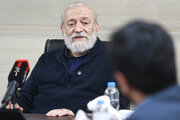
To find the master, Mehr News local correspondent has found his pottery workshop in Imam Reza (as) Art and Culture Complex in Mashhad. She found the master working preparing the special mud for the machine. His old face is quite placid, which our correspondent assumed left by years of bestowing life on mud and clay. “Now it is for 30 years I am working as a professional; I have done my best to revive this art which is a spiritual heritage of Khorasan,” says the master craftsman. “Since my childhood I loved playing with mud, and my father discovered this talent of mine and encouraged me in this path,” he adds.
“There was a time when there was no place for this art to be taught in the province; I revived the art, which is in the verge of being forlorn,” tells Fazlinejad to our correspondent; however, he laments the fact that officials would not support the art to save it from dying out.
“I have been working to help this art to find stronghold in the finds of the youth; the art of pottery however is being forgotten and my disciples have abandoned practicing it for the difficulties associated with it and the lack of support by the government officials; this is a great blow to pottery, and the province has forgotten the clay jar,” Fazlinejad laments.
“The art of the millennia has now gone obsolete; I would fight through thick and thin to save the workshops though,” he points out. “Pottery and playing with mud has been shown to have magic powers in treatment of psychological disorders, the researchers have found,” he reports on the medical properties of the art, “it is a sort of physiotherapy, depleting the hidden energy and with it the malady of the spirit,” he adds.
Fazlinejad urged also the provincial authorities of the culture to save the art of the millennia from being forgotten. “All should work to save the art which is a valuable heritage to remain and find its place as an art sempiternal and effective in healing psychological disorders,” he says.
SH
MNA
END










Your Comment