


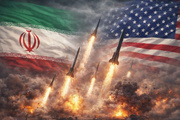
The experience of the recent war with Iran has shown that resorting to the military option against Tehran, contrary to the calculations of its architects, is not only not a guarantee for achieving political and security objectives, but can also bring heavy costs and unpredictable consequences for its initiators. Now, under conditions in which some political and military circles of the Zionist regime speak of the possibility of a new round of confrontation with Iran, the media and military figures of this regime are warning about the consequences of such a decision.
The Hebrew-language newspaper Haaretz, in a report, has emphasized that the start of a new round of conflict with Iran could be a strategic error; an error whose consequences will not be limited to Iran's borders and the occupied territories and may even involve the countries of the Persian Gulf region in a widespread crisis. This assessment shows that concern about the expansion of the scope of confrontation with Iran has become one of the serious topics in Israel's media and political circles.
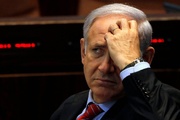
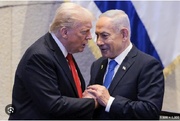
In this regard, Itzhak Brik, a retired general of the Zionist regime's army, in a note in the Ma'ariv newspaper, has warned about the possibility of Donald Trump, the American president, and Benjamin Netanyahu, the prime minister of the Zionist regime, moving toward a new military action against Iran. According to Brik, if American and Israeli decision-makers move toward such an action under the influence of political calculations and domestic developments, its consequences will go far beyond a bilateral confrontation.
This retired general believes that renewed confrontation with Iran can spread the fire of crisis across the region, intensify the Zionist regime's internal problems, and place this regime in a situation from which exit will be very difficult. The importance of this warning increases when we know that Brik speaks from within Israel's military structure, and his assessment is based on an understanding of this regime's military capacities, operational limitations, and vulnerabilities.
The Costs of a Miscalculation
One of the most important lessons of the recent war with Iran is the change in Israel's and America's security calculations regarding the costs of military action against Tehran. In the past, part of the decision-making circles in Tel Aviv imagined that weapons superiority and the possession of American military support could provide the possibility of imposing will on Iran. However, practical experience showed that entering a military confrontation with Iran does not mean beginning a path whose end can be easily determined.
Iran, possessing diverse military capacities, extensive strategic geography, and the ability to use various instruments of power, has the possibility of raising the costs of action against it to a level beyond the opposing side's initial calculations. For this reason, any decision to start a new round of confrontation must be made by taking into account a set of military, security, and economic consequences; consequences whose control may slip out of the hands of the initiators of the crisis.
Under such circumstances, the issue is not only the extent of possible damage to Israel's military targets. The expansion of the scope of conflict can also affect vital infrastructure, economic centers, energy facilities, and important transportation routes in the region. The countries of the Persian Gulf region, due to their geographical position and their role in the global energy market, are vulnerable to the consequences of a widespread crisis. Any disruption in the security of this region can transfer its economic effects to global markets, energy prices, and international trade.
From this perspective, Haaretz's warning about the possibility of the crisis expanding to the Persian Gulf countries is not merely a limited security concern, but expresses the economic and geopolitical dimensions of a possible confrontation with Iran. In other words, the decision for renewed war with Tehran can impose costs on various actors that do not necessarily have a clear place in Tel Aviv's and Washington's initial calculations.
Israel's Internal Crisis; A Determining Variable
Another important point in Brik's warning is the emphasis on the effect of a possible confrontation with Iran on the internal situation of the Zionist regime. This regime faces a set of political, social, and security challenges, and any widespread military crisis can increase pressure on its political and economic structure.
Under such conditions, decision-making about entering a new confrontation may be influenced by the political considerations of Israel's leaders rather than being based on a realistic assessment of security interests and costs. Netanyahu also faces numerous pressures and challenges in the domestic political atmosphere, and this issue highlights the necessity of separating the Zionist regime's strategic interests from its government's short-term political considerations. On the other hand, America's entry into such an equation will not be cost-free either. Washington must strike a balance between supporting Israel, maintaining the security of its forces and facilities in the region, and preventing the expansion of the crisis in the Persian Gulf. The wider the scope of the confrontation becomes, the more America's political and military costs will also increase. Therefore, support for a new military action does not necessarily mean the ability to control all its consequences.
Why Is Renewed Confrontation with Iran Not Strategic?
The set of these developments shows that the main issue for Tel Aviv and Washington is not merely the possibility of starting a new military action; rather, the fundamental question is the ability to achieve the desired result and control its consequences. Starting a military operation may be technically possible, but this by no means guarantees that the desired political and security objectives will be realized.
The experience of the past eight months has also shown that Iran possesses the necessary capacity to respond and impose costs on the opposing side. This experience has made the calculations related to confrontation with Tehran more complex and has shown that Iran cannot be considered an actor that, in the face of military pressure, will suffice merely with limited and predictable reactions.
In fact, one of the most important factors of Iran's deterrence is the ability to link military capacities with geopolitical position and to influence the region's security equations. This very issue causes any military action against Iran to probably be accompanied by a set of chain consequences whose containment will not be easy for America and the Zionist regime.
Ultimately, the warnings published in Haaretz and Ma'ariv should be seen as a sign of the existence of serious concern in part of Israel's media and military circles about the costs of renewed confrontation with Iran. These warnings indicate that even within the Zionist regime, this reality has been taken into consideration that military superiority alone is not a guarantee of political and strategic victory.
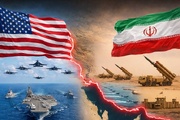
For Tel Aviv and Washington, the issue is no longer merely choosing between military action and non-action; rather, it is choosing between accepting the new realities of the region and entering a crisis whose dimensions and costs may be far beyond initial predictions. From this perspective, the start of a new round of confrontation with Iran is not a display of power, but can be the beginning of a strategic error with widespread consequences for the entire region.
MNA












Your Comment