

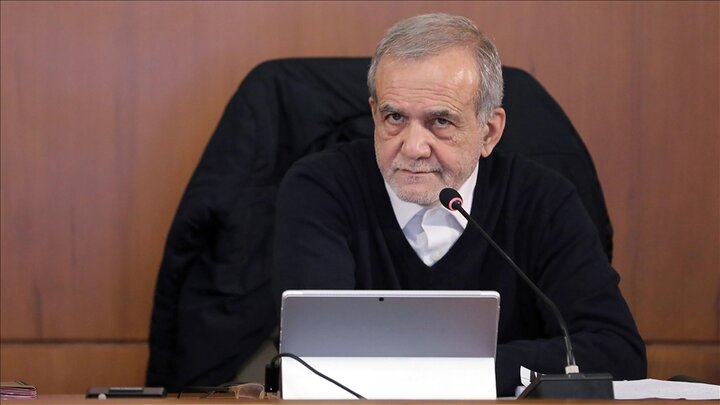
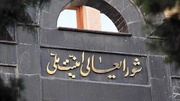
In a meeting with heads of Iranian media outlets in Tehran on Sunday, Pezeshkian emphasized that preserving national unity and social cohesion is Iran’s highest priority in the current sensitive circumstances, reiterating that the decisions regarding war and negotiations are made under the authority of Leader of the Islamic Revolution Ayatollah Seyyed Mojtaba Khamenei and the Supreme National Security Council (SNSC).
He also warned that internal divisions and political polarization represent the greatest threats to the country and stressed that all groups should respect official decisions and avoid actions that could weaken solidarity. According to the president, successful management of present challenges requires cooperation among all institutions, strengthening social trust, and preventing social and political conflicts.
The president stated that decisions regarding war and negotiations are made within the framework of the Supreme National Security Council and under the guidance of Leader of the Islamic Revolution Ayatollah Seyyed Mojtaba Khamenei.
He stressed that no individual or political faction should act outside legal mechanisms and that criticism should not undermine those carrying out official responsibilities. The president said his administration seeks honorable negotiations aimed at protecting national interests while maintaining independence and refusing to submit to external pressures.
President Pezeshkian praised the role of the Armed Forces and affirmed the government's commitment to providing them with the necessary support. At the same time, he stressed the importance of rational decision-making based on national capabilities. He also described the expansion of relations with neighboring countries as a key component of foreign policy, arguing that regional cooperation can strengthen economic, political, and security interests while preventing tensions and divisions among countries in the region.
He also underlined that improving living conditions and reducing economic pressures are among the government's most important responsibilities. He highlighted the need to combat corruption, inequality, and rent-seeking while supporting underprivileged groups. The president acknowledged that recent conflicts have damaged infrastructure and increased economic difficulties, making structural reforms and fair resource distribution essential.
MNA


Your Comment