


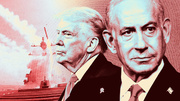
Donald Trump’s recent handling of the ceasefire with Iran is not a one-off decision or a simple reaction to an unexpected development. It is the latest manifestation of a deeply embedded pattern in his approach to complex international crises. The sequence is by now familiar: a period of maximalist threats and sharp deadlines, followed by a last-minute retreat when the cost of action becomes tangible. The unilateral extension of the two-week truce with Iran offers a clear window into this recurring cycle.
In the days leading up to the deadline, President Trump employed characteristically forceful rhetoric, repeatedly signaling that the ceasefire would not be extended. His administration sought to create a psychological vise, coupling verbal ultimatums with the continuation of a maritime blockade. The strategic logic appeared straightforward: present Tehran with a choice between capitulating to Washington’s terms for talks in Islamabad or facing a sharp escalation of the crisis. The blockade was intended as the lever to make negotiation under pressure unavoidable.
This calculation, however, collided with an established Iranian strategic doctrine. Tehran’s position was unequivocal: no dialogue of any kind would commence so long as the maritime blockade remained in effect. This is not a tactical whim but a core principle of Iran’s statecraft—a rejection of negotiation under duress. By drawing this clear red line, Iran effectively neutralized the leverage Washington believed it held. The attempt to force a conversation through the barrel of a gun had reached an impasse.
It was at this juncture that the familiar Trump pattern reasserted itself. As the two-week ceasefire window closed, the U.S. president faced a stark binary choice of his own making: follow through on the threat and accept the unpredictable costs of a broader military escalation, or step back from his own declared position. The outcome was the latter—a quiet, unilateral extension of the truce. This is the essence of the dynamic captured in the phrase "Trump Always Chickens Out." This phrase describes a pattern of behavior that has been repeated at several different points: announcing tough positions, creating high expectations, and finally backing down in the face of real costs.
To understand this recurring retreat, one must examine Trump's conception of foreign policy. In this view, politics is less a layered, multi-variable process and more a stage for performance. The threat itself, the setting of the deadline, and the use of uncompromising language are often perceived as ends in themselves—displays of strength that require no follow-through to be considered successful. But this performative approach inevitably falters when it meets reality. Unlike other actors who may bend under psychological or economic strain, Iran has cultivated a deterrent posture over recent years that drastically raises the cost of impulsive military action. This deterrence is not solely a function of military hardware; it is a composite of regional influence, energy infrastructure, and a demonstrated willingness to absorb pressure.
A threat is only as credible as the will to execute it. When that will is absent, the threat transforms from an asset into a liability. Each unenforced ultimatum erodes the credibility of the next, emboldening the other side to resist with greater confidence. The ceasefire episode illustrates this erosion precisely. By backing away from his own rhetoric, Trump signaled that in the equation of "power projection" versus "cost absorption," the latter still carries the greater weight. He is willing to push up to the edge of the cliff, but not to step off it.
Some observers might counter that this behavior constitutes a form of strategic ambiguity or a calculated negotiation tactic—a way to keep adversaries off balance without committing to a catastrophic path. It is true that avoiding a major war is a rational outcome. However, the pattern carries significant long-term consequences that transcend the immediate relief of a de-escalation. First, the repetitive cycle of threat and retreat systematically erodes U.S. diplomatic credibility. In international relations, credibility is a tangible currency; once it is devalued, adversaries recalibrate their risk calculus accordingly.
Second, this dynamic reinforces the strategy of resistance within Iran. When Tehran observes that steadfastness in the face of pressure consistently yields a Washington backtrack, it validates the approach and strengthens the internal consensus for continuing it. A feedback loop is created: the more Washington bluffs, the more confident Tehran becomes in calling that bluff. Third, this pattern is closely watched by other global actors, who may conclude that U.S. brinkmanship is more about domestic political theater than a genuine readiness for conflict.
The recent ceasefire extension was not merely a scheduling adjustment. It was a reaffirmation of a behavioral trend that has defined Trump's handling of high-stakes confrontations. The gap between the theater of threats and the acceptance of real-world costs remains wide, and so long as that gap persists, the cycle of backing down is likely to repeat itself.
MNA

















Your Comment