

When the US military bases called Subic and Clark were operating in the cities of Angeles City and Olongapo in the Philippines, I visited these two cities. The first thing that caught my attention there was the presence of poor blond or black children and teenagers who were employed in jobs such as peddling, shoe polishing, and... After asking around, I realized that these were the products of the entertainment and illicit relationships of US soldiers with teenage and young Filipino girls, soldiers who returned to their country after a few months of mission and did not witness the miserable lives of their illegitimate children. Fortunately, following continuous protests by the people, the Subic and Clark bases were closed in the early 1990s, but the memory of the ugly and inappropriate actions of American soldiers is still alive among the Filipino people.
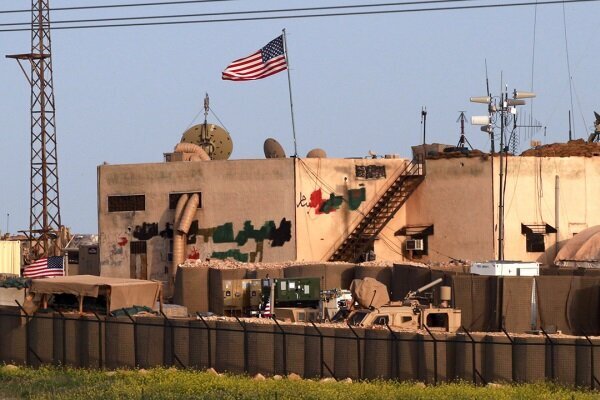
As a significant part of the country's military power, US military bases around the world have a huge economic and social cost to host communities, including the growth of prostitution, human trafficking, violence against women and prisoners, the spread of sexually transmitted diseases, environmental degradation through fossil fuel consumption, and greenhouse gas emissions. For example, during the construction of bases such as Camp Humphreys in South Korea or Shoalwater Bay in Australia, millions of trees were cut down, and the habitat of vital species was destroyed. Of course, the economic costs and huge expenses incurred by the host to maintain these bases would be a major factor in progress if they were spent on implementing domestic projects.
The most important problem of these bases for the host countries is the preference of American interests over the interests of the host countries, which at times provokes regional tensions and wars, suppresses diplomacy, and prevents the continuation of peace.
In West Asia, the main tasks of these bases are to support the interests of Israel, sell weapons, create tension and disagreements between Iran, and prevent the formation of a regional security regime without foreign interference.
Legally, a military base of one country on the territory of another is considered the same as the embassy of the host country, and its current laws are in accordance with the laws of the host country. In these military bases, there is no presence of anyone from the host country, and in some cases, such as the US military base in the Okinawa region of Japan, the military of the host country even enjoys judicial immunity. In some of these bases, houses have been built, and the relevant personnel have lived with their families for many years.
Attacking these bases is not considered an attack on the host country, and for this reason, Iran's attacks on the Ain al-Assad base in Iraq in response to the assassination of martyred General Soleimani and the Al Udeid Air Base in Qatar due to the US aggression against Iran are considered attacks on US territory and have legal justification.
Although the construction of these bases in the Persian Gulf littoral countries is said to be aimed at strengthening regional security, recent US threats against Iran and the possibility of war spreading have led the countries of the region to take extensive diplomatic measures to manage this situation.
The Persian Gulf littoral states, which mainly seek economic progress under the shadow of security, are concerned about the expansion of a possible US war against Iran and believe that the dimensions of the US's adventurous action will not be limited to its warships, because Tehran has announced that if an operation is carried out against Iran from US bases, Iranian military forces will respond decisively.
The key point of the statements of the Leader of the Islamic Revolution on February 1 is that "the Americans should know that if they start a war, this war will be a regional war." It also indicates Iran's serious determination to defend the rights of the nation in the event of American aggression.
The countries of the region, which are very concerned at this point, know very well that Iran not only does not seek war, but has for years emphasized ensuring collective security in the West Asian region using indigenous capabilities. Accordingly, it is necessary to form a common vision to defend the security of the Persian Gulf, given the continuation of American regional threats and the possibility of their recurrence in the future.
Your Comment