


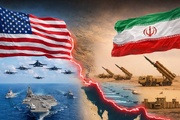
In recent weeks, American officials have once again resorted to the language of threat, pressure, and military warnings, attempting to create an atmosphere of intimidation against the Islamic Republic of Iran. Although this approach is presented superficially with new rhetoric and with reference to the latest developments in the region, it is in fact a continuation of the same policy that has been tested repeatedly by various U.S. administrations over the past decades and has yielded nothing but failure. From this perspective, what is heard from Washington today is less an indication of a new strategy than a repetition of a worn-out, threadbare pattern—a pattern that has failed time and again yet remains on the agenda of a segment of the U.S. political establishment.
The history of Iran-U.S. relations shows that whenever Washington has imagined it could force the Islamic Republic of Iran to back down by intensifying military threats, economic pressure, or psychological warfare, it has encountered an outcome different from its initial calculations. Contrary to the expectations of the architects of this policy, external pressure has not only failed to change Iran’s behavior but has, in many instances, led to the strengthening of internal cohesion, increased convergence among decision-making institutions, and a bolstered national will to defend the country’s interests.
This reality can be observed at various historical junctures. From the era of the imposed war to the years of extensive sanctions, the U.S. withdrawal from the nuclear deal, the implementation of the so-called "maximum pressure" policy, and finally the recent military confrontations, the end result has differed considerably from what was envisioned in Washington. Each time, the United States expected that escalating pressure would compel Iran to accept its demands, but the course of events has shown that the equation is not so simple.
Threat: A Constant Tool of U.S. Foreign Policy
One of the defining features of U.S. foreign policy toward Iran is the persistent reliance on the tool of threat. Changes in administrations, the rotation of political parties, and even differences in presidential rhetoric have had little impact on the core of this approach. Republican and Democratic administrations alike, each in a different manner, have employed military threat, economic sanctions, political pressure, and psychological operations as instruments of coercion.
The important question, however, is why, despite repeated experiences, this policy continues to be repeated. The answer must be sought in the U.S. decision-making structure. A segment of Washington’s political elite still believes that intensifying pressure can shift the balance in America’s favor—even though practical experience has repeatedly disproven this assumption.
Calculations That Have Proven Wrong Time and Again
One of the most significant strategic errors of the United States has been overlooking the structural characteristics of the Islamic Republic of Iran and the manner in which the country confronts external pressures. In many cases, American analysts have imagined that increasing economic pressure or military threats would widen internal rifts and set the stage for a change in Iran’s behavior.
But what has occurred in practice has often been the opposite of these predictions. Whenever external threats have escalated, the issue of defending national security and safeguarding the country’s interests has become an overarching priority, and this very matter has reinforced internal cohesion. In other words, the tool of pressure has, on numerous occasions, not only failed to weaken Iran but has led to increased resistance against external pressures.
Recent Developments and the Repetition of the Same Scenario
The developments of recent months are no exception to this rule. Concurrent with the escalation of American officials’ belligerent rhetoric, the Islamic Republic of Iran has repeatedly emphasized that any hostile action will be met with a proportionate, decisive response based on strategic calculations. These positions demonstrate that Tehran continues to emphasize the principle of active deterrence and seeks to correct any miscalculation regarding the costs of actions against Iran.
On the other side, the political atmosphere in the United States is not monolithic. Contrary to what is sometimes reflected in the media, there are serious disagreements within the United States over the continuation of the policy of confrontation with Iran. Many security experts and even some former U.S. officials believe that escalating tensions has not only failed to achieve Washington’s goals but has also imposed considerable costs on the United States.
These differing viewpoints have become particularly more pronounced following recent developments in the region. A segment of the American elite believes that continuing the policy of threat could draw the United States into crises whose management would be far more difficult than their initiation.
Deterrence: The Factor Altering Calculations
One of the most important factors that has diminished the effectiveness of U.S. threats is the evolution in Iran’s deterrence capability. Over the past years, the Islamic Republic of Iran has endeavored to raise the cost of any military action against it by developing its defensive, missile, drone, and naval capabilities.
As a result, American decision-makers can no longer decide on the use of the military option without considering its consequences, as they might have in past decades. Any action against Iran today carries a set of security, economic, and political consequences that have complicated Washington’s calculations.
Furthermore, Iran’s geopolitical position also plays a significant role in this equation. Iran’s location in one of the world’s most sensitive regions and its proximity to major energy transit routes means that any crisis has transregional effects. This very issue has led many international actors to approach the increase in regional tensions with caution.
Psychological Warfare: A Complement to the Policy of Pressure
America’s threats are not solely military in nature. A significant portion of this policy is based on psychological operations, media warfare, and efforts to influence public opinion. The aim of these actions is to create an atmosphere of uncertainty, instill a sense of weakness, and increase psychological pressure on the opposing party.
However, experience has shown that this tool has also failed to achieve Washington’s intended goals. Iran’s public opinion has faced such atmospherics repeatedly over the past years, and for this reason, the impact of these psychological operations has diminished compared to the past. Moreover, the constant repetition of threats that do not lead to effective action in practice has gradually eroded the credibility of these messages.
Why Does America Continue on This Path?
If this policy has failed repeatedly, why does Washington continue to pursue it? Part of the answer lies in America’s domestic considerations. In many cases, harsh rhetoric against Iran is designed less to change Tehran’s behavior than to address a domestic audience. Administrations attempt to disarm their political opponents by displaying hardline stances or to send a reassuring message to America’s regional allies.
Another factor is the absence of a clear alternative to the policy of pressure. In a situation where the military option is assessed as costly and the experience of sanctions has not yielded the expected results, some American politicians continue to resort to the same old rhetoric—rhetoric that carries little political cost but produces no significant achievement in the practical arena.
The Future of This Repetitive Game
An examination of the course of recent years indicates that the continuation of threats alone is incapable of altering the equations. The Islamic Republic of Iran has repeatedly declared that it will not pursue a policy of retreat under pressure and will respond to any hostile action proportionately according to circumstances. Under such conditions, the repetition of the language of threat, more than indicating initiative, reveals the lack of effective options available to Washington.
The reality is that the equations of the West Asian region have transformed compared to the past, and various actors, including the United States, are compelled to factor these new realities into their calculations. Continuing a policy based on threat, without comprehending these developments, will not only fail to change Iran’s behavior but could also add to the complexity of crises and increase America’s costs.
In sum, Washington’s recent rhetoric should be seen as a continuation of the same repetitive, threadbare game that has been repeated time and again under various titles and pretexts. Experience has shown that this policy has neither succeeded in deterring Iran from pursuing its national interests nor achieved America’s stated objectives. Hence, as long as Washington’s outlook remains based on threat, pressure, and intimidation, it seems unlikely to achieve a result different from the past—because on-the-ground realities and historical experience have shown that this game, rather than cornering Iran, exposes the strategic limitations of the United States itself.
MNA













Your Comment