


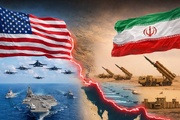
The illusion of an "easy victory" in foreign policy often begins precisely where power, instead of being properly understood, is oversimplified. This error becomes more dangerous when the decision-maker reduces the complexities of the field to a short-term calculation and imagines that with a limited strike, they can create a large and lasting outcome. During Trump's 40-day war, he held this notion of an easy victory, but in confronting Iran, such a perception not only failed to yield results but gradually became a factor in shifting the balance to the detriment of its designers.
The initial assumption was that a swift and targeted action could disrupt Iran's decision-making structure and compel the country to retreat. This view is rooted in an understanding that reduces power solely to hard tools and technological superiority. But the reality of the field demonstrated that power is a multilayered concept; a combination of long-term preparedness, strategic depth, adaptive capacity, and, most importantly, internal cohesion. This is precisely where the initial calculation faced an error.
Iran, over the past decades, has been shaped under conditions where pressure and threat have been a permanent part of its surrounding environment. Such conditions have, over time, cultivated a kind of strategic thinking built upon resilience and continuity. Within this framework, the scenario of conflict is not a distant possibility but a serious assumption, for which multilayered planning has been undertaken. The result of this perspective is the creation of a structure that can withstand the initial blow and quickly adapt to new conditions.
In contrast, a decision designed based on a "quick victory" usually lacks such depth. This type of decision-making, rather than looking to the future, is focused on the present moment and rests on the assumption that the opposing side lacks the necessary capability or will for an effective response. But when this assumption proves incorrect, the entire equation collapses. Instead of a short path to victory, a long and costly path emerges, where each step is more complex than the previous one.
One of the most important indicators of this change is the gradual transfer of initiative. At the beginning of any conflict, the party that initiates the action usually imagines it holds control of the field. But this control is meaningful only if it can be sustained. If the opposing side can absorb the blow and rapidly recover, the initiative gradually slips away from the attacker. This is exactly what occurred here: a situation where Iran, by preserving its structure, was able to redirect the costs back toward the opposing side.
In this context, the role of internal cohesion cannot be overlooked. National power is not limited to equipment and military capability alone; it also depends on the degree of societal convergence in the face of threat. The greater this convergence, the higher the capacity to withstand pressure, and the lower the possibility of exploiting internal divisions. One of the key miscalculations was the neglect of this very factor; a factor that, in practice, served as a crucial backbone for the continuation of resistance.
On the other hand, modern wars are heavily dependent on the element of time. Many plans are formulated on the basis of achieving results within a short timeframe. However, if this timeframe is extended for any reason, those same plans gradually lose their effectiveness. Costs rise, internal and external pressures increase, and the decision-making space becomes more constrained. In such circumstances, a party that has prepared for a short conflict suddenly finds itself in an attritional situation for which it does not fully possess the necessary tools to manage.
This is the point at which initial advantages begin to fade. In a war of attrition, what matters is the ability to endure. A country that can preserve its resources, regenerate them, and simultaneously manage pressures gradually gains the upper hand. This process may not be clearly visible in the short term, but in the long term, it reveals itself in changes to behaviors and decisions.
It is noteworthy that a shift in the balance does not necessarily manifest as a sudden victory. Sometimes this change appears in the form of small but meaningful signs: increased caution in stances, a shift in the tone of statements, or efforts to manage the crisis rather than expand it. These signs indicate that initial calculations are being revised and that objectives are gradually being adjusted.
In such an atmosphere, even harsh rhetoric and emphatic statements can take on a different meaning. What appears on the surface as a display of power can, in some cases, reflect the pressures arising from a complex situation. When options become limited, language becomes sharper, but this sharpness does not necessarily signify holding the upper hand; rather, it is sometimes an indication of an attempt to compensate for a vacuum in the operational field.
In contrast, a party that has managed to maintain its equilibrium usually has no need for such displays. It knows that time is gradually working in its favor and that the longer the conflict continues, the more its advantages become apparent. This is where strategic patience transforms into a powerful tool; a tool that can alter the course of a conflict without the need for costly actions.
Ultimately, what remains from this experience is an important lesson in understanding power. Power is not solely the ability to strike; it is also the ability to withstand a blow, to rebuild, and to continue. A country that can combine these three elements can, even under heavy pressure, preserve its position and gradually strengthen it over time.
The illusion of an easy victory stems precisely from ignoring this very reality. When complexities are omitted and equations are viewed in an oversimplified manner, decisions are made that appear attractive on the surface but, in practice, carry heavy costs. In this context, a party that better understands the realities and has prepared itself for various scenarios can utilize these very errors as an opportunity to strengthen its own position.
In the current circumstances, what stands out more than anything is a gradual shift in the perception of the balance of power. Superiority can no longer be measured by the same old criteria. The field has become more complex, and new factors have entered the equation; factors that, if ignored, can challenge even the greatest powers.
In the midst of this, Iran has demonstrated how one can navigate a tense situation and even transform it into an opportunity to redefine power through a combination of preparedness, flexibility, and reliance on domestic capacities. This experience is not merely a transient event; it is an indication of a deeper trend, a trend in which traditional equations are gradually giving way to new models.
In such a landscape, what will prove decisive is not only what is possessed today but also the ability to shape tomorrow. A country that can better envision this future and prepare for it can find its path even in the heart of a crisis and, rather than becoming entangled in the consequences, become a factor that shapes them.
MNA



Your Comment