


In a meeting with the Iranian people on the occasion of the 47th anniversary of the victory of the Islamic Revolution, Ayatollah Khamenei, the Leader of the Islamic Revolution, referred to the role of Imam Khomeini in instilling the spirit of self-confidence, hope, and ambition in the people, and said, “Who would have believed that one day Iran would develop a weapon that the United States would try to reproduce? Had that crossed anyone's mind? But it happened; it happened. Imam [Khomeini] instilled this spirit of self-confidence into the people.”
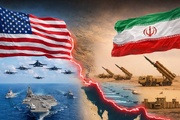
The Leader of the Islamic Revolution's remarks were in response to US President Donald Trump's praise of the power of Iranian-made drones during a meeting attended by executives of major American companies in Doha. Referring to the US-made Lucas drone, which was copied and manufactured from Iran's Shahed 136 drone, Trump said in the meeting, "I want a lot of drones, and in the case of Iran, they make a good drone, and they make them for $35,000, $40,000."
“So I said to that company, ‘I want to see something like that.’ Two weeks later, they came to me with a drone that cost $41 million! I said, ‘That’s not what I was talking about. Forty-one million?! I’m talking about something that costs $35,000 to $40,000, so you can fly them by the thousands,' he said.
He described Iranian drones as “very good, fast, and deadly,” emphasizing their growing role in modern warfare – an admission that came years after Americans likened Iranian drones to photoshopped images.
Apart from America, Russia also produced its Russian version called "Gran-2" based on the Shahed 136 drone and used it in the Ukrainian war. Russia is a military power in the field of drone manufacturing, and its copying of the Iranian drone shows the extraordinary progress of the Islamic Republic in the field of aerospace technology.
Also, China, another military power in the world, demonstrated by testing the "Long M9" drone, which is very similar to the Shahed 136, and this drone can be useful for all countries as a new brand in asymmetric air wars.
The repeated emphasis of the Leader of the Islamic Revolution on the necessity of utilizing the ability of the people, especially the youth, for scientific and technological innovations is not a slogan, but a strategic recommendation that can be applied and transformative even in times of sanctions and economic restrictions. Direct or indirect imitation of Iranian inventions by powers such as the United States, Russia, and China should not be taken lightly; this development shows that the Islamic Republic has changed the rules of the game and has forced narcissistic and arrogant individuals like Trump to praise them.
In the 47th year of the anniversary of the victory of the Islamic Revolution, it can be concluded with a fair judgment that Iran has made extraordinary progress in many scientific fields, and that is why in some fields, such as nanotechnology, medicine, nuclear, and aerospace, it is among the top 10 countries in the world.
In fact, achieving such a level of scientific progress through the efforts of Iranian researchers and scientists is strong proof of the ineffectiveness of the cruel sanctions of the United States and Europe against Iran. In the meantime, progress in the aerospace industry and space technologies, with the launch of modern satellites such as the Omid, Noor 1 and 2 satellites; Zafar, and Payam; Research and communication satellites, as well as the construction of indigenous satellite carriers such as Safir, Simorgh, and Qased, have made the phrase "we can" tangible and practical.
On the anniversary of the victory of the glorious Islamic Revolution, we send our greetings to the lofty and pure soul of the late Imam, and we ask God Almighty, under the wise leadership of his successor, that the Islamic Republic of Iran may follow the path of growth and excellence faster than in the past and ascend to lofty scientific peaks.






Your Comment