

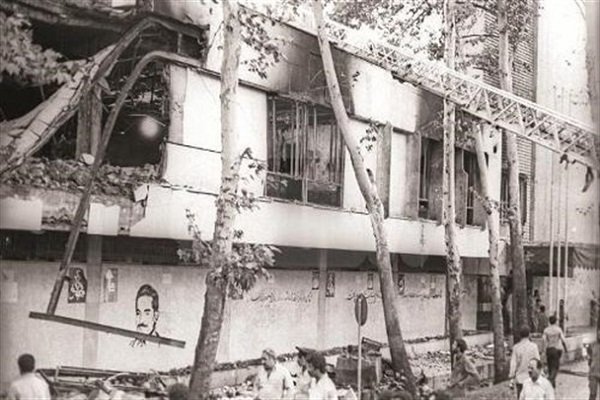
The challenges facing human rights at times go missing amid international reports or political disputes. One such under-examined area within the international sphere is the issue of terrorism victims in Iran—an issue situated at the intersection of security, politics, and human rights. Precisely because of this interdisciplinary nature, it has often remained outside the focus of academic studies and international institutions.
According to documented data collected by the Habilian Foundation, more than 23,000 Iranian citizens have lost their lives in terrorist attacks since 1979. These victims represent a wide spectrum of Iranian society, including children, women, workers, teachers, office employees, and ordinary citizens with no political or security role in national developments. They include 500 children under 12 years old, 100 of whom were under the age of five at the time of the attacks; 650 women, 800 farmers, 650 workers, 200 teachers and students, and more than 150 elderly citizens over 70. These figures reflect only part of the reality of the vulnerable victims of terrorism in Iran. This diversity conveys a clear message: terrorism in Iran has primarily targeted ordinary civilians.
From the perspective of international law, this reality illustrates a widespread violation of the right to life—a right that, under Article 3 of the Universal Declaration of Human Rights (1948) and Article 6 of the International Covenant on Civil and Political Rights (1966), is inherent, absolute, and non-derogable.
Despite the scale of these violations, global attention to terrorism victims in Iran has remained limited. A major reason is the politicization of terrorism in international discourse and its segregation from human rights frameworks. In many reports, terrorism is categorized strictly as a security matter; consequently, its human and legal dimensions—such as the impact on families, especially children, the resulting social and psychological harm, and the right to truth and justice—receive little analysis and often no attention at all. If the international community seeks a comprehensive and impartial approach to human rights, it cannot overlook this form of violation of the right to life simply because these victims do not fit prevalent political classifications. According to international standards, intentional attacks against civilians—regardless of the perpetrators’ identity or political motives—constitute clear human rights violations and, in some instances, may even fall under the broader definition of crimes against humanity.
Another critical issue is the limited presence of data on terrorism victims in Iran within international databases and global human rights reporting systems. Although efforts have been made in recent years inside Iran to document and publish information about these victims, such data has yet to gain adequate visibility in mainstream human rights research or among international monitoring bodies. The result is a form of structural absence in the global narrative on terrorism—one in which some victim groups receive attention while others, including Iranian victims, remain marginal or entirely unseen. Over time, this imbalance can contribute to unintentional bias within human rights literature and reduce its comprehensiveness. International bodies, including the UN Human Rights Council and its thematic rapporteurs, must give this issue focused consideration.
The social dimensions of terrorism in Iran also require deeper scholarly attention. Field studies and case assessments reveal that the impact of terrorism extends beyond direct victims to families and local communities, who face long-term consequences such as loss of livelihood, psychological trauma, and disruption of social cohesion. From a human rights perspective, these consequences relate to the right to human security and the right to social protection. In other words, terrorism in Iran threatens not only individual lives but also the fabric of society and the broader concept of human security as a pillar of sustainable development.
Raising the issue of terrorism victims in Iran on Human Rights Day carries not only symbolic value but also conceptual significance: human rights gain their true meaning only when they are comprehensive, inclusive, and free from political hierarchies. Ignoring segments of victims—due to their geography, the host state of the terrorist groups, or regional political complexities—ultimately weakens the universalist approach to human rights. International organizations, scholars, and civil society institutions should ensure that the issue of terrorism victims in Iran is examined impartially within academic and legal frameworks, preventing it from becoming merely a political matter.
Media outlets and specialized publications also play a vital role. Accurate representation of data, avoidance of emotional or stereotypical narratives, emphasis on documentation and legal analysis, and linking terrorism studies with human rights scholarship can collectively help develop a new, balanced analytical framework. Similarly, cooperation between domestic researchers and international bodies can improve access to data and facilitate its verification.
Ultimately, the issue of terrorism victims in Iran is not a narrowly national concern; it forms part of the global puzzle of terrorism and its human rights implications. Addressing this topic is not merely a matter of defending the rights of a single nation’s citizens; it is an effort to enhance coherence and impartiality within the human rights system as a whole. Human Rights Day serves as a reminder that the right to life is the most fundamental human right, and any deliberate attack on civilians—regardless of motive or geography—must be rigorously examined, documented, and pursued within human rights discourse.
MNA











Your Comment