


In the literature of international relations, the power of countries and leaders is usually measured by indicators such as military capability, economic capacity, political influence, and the scope of international coalitions. However, history has shown that alongside these hard components, there exists another kind of power that originates neither from military arsenals nor from gross domestic product; rather, it is rooted in legitimacy, social capital, intellectual authority, and the ability to inspire. This is the very power that can transcend geographical boundaries, ethnic differences, and even religious divides, creating a network of empathy and convergence among nations. The martyred leader of the Islamic Revolution must be analyzed within this very framework; a figure whose scope of influence extended beyond the borders of the Islamic Republic of Iran for decades, and after his martyrdom, this reality was placed before world public opinion with even greater clarity.
The funeral ceremony of the martyred leader was not merely a national mourning ritual; rather, it became a rare geopolitical, social, and media event. The presence of official delegations and political, religious, cultural, and social figures from dozens of countries around the world alongside millions of mourners was only part of the dimensions of this event. The primary significance of this ceremony lay in the fact that it demonstrated that a leader's influence cannot be measured solely by the political territory of the country he heads. The breadth of nations' presence and international reactions presented a different picture of the martyred leader's standing in the international system—a picture that extended beyond the borders of Iran and even the Islamic world.
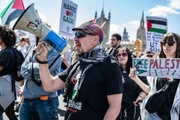
One of the most important indicators of the transnational nature of the martyred leader's persona was the geographical scope of the commemorative ceremonies held for him. Concurrent with the funeral held in Iran, dozens of official and popular ceremonies were held in various countries. Iraq with its million-strong ceremonies in the holy cities, Lebanon, Yemen, Pakistan, Afghanistan, various African countries, parts of Europe, Latin America, and even Muslim communities in North America—each contributed its share to this global farewell. This geographical dispersion was not merely an emotional outpouring of sympathy; rather, it was the reflection of a network of intellectual and value-based bonds that had been formed over many years and now, at the critical juncture of its leader's martyrdom, had revealed itself.
Here, the distinction between "official power" and "social authority" takes on particular importance. Many world leaders command public attention only as long as they remain within the power structure, but with the end of their tenure or even death, the scope of their influence rapidly diminishes. In contrast, the martyred leader of the Revolution was among those figures who had acquired a significant portion of his standing not from political power, but from symbolic capital, intellectual authority, and social trust. For this reason, his funeral ceremony, more than being a governmental program, became a broad, transnational social act—an event in which the actors were not only states, but nations, elites, popular groups, and intellectual currents also played a role.
This phenomenon can also be analyzed from the perspective of soft power theories. Joseph Nye, the American theorist, defines soft power as the ability to influence through attraction, legitimacy, and persuasion. Although this theory has been mainly advanced concerning states, in practice, certain leaders also become sources of soft power generation by virtue of their personal qualities, discourse, and conduct. In the case of the martyred leader of the Revolution, what shaped this power was not merely his political position; rather, it was a combination of steadfastness on principles, support for oppressed nations, defense of countries' independence, opposition to the domination system, and persistent emphasis on the Palestinian cause. It was these very qualities that ensured the scope of his influence did not remain confined to a single society or a particular faith.
The media coverage of the funeral ceremony confirmed this reality as well. Many international media outlets, even those that had adopted critical stances toward the Islamic Republic of Iran in recent years, were compelled to cover the unprecedented dimensions of this ceremony. The images of the millions-strong public presence, reports on concurrent ceremonies held in various countries, and the attendance of foreign figures highlighted the reality that we are dealing with a personality whose social capital is defined beyond the formal frameworks of power. In fact, the volume of media coverage itself became an indicator for gauging the significance of this event on the international level.
The funeral ceremony of the martyred leader must also be examined from the perspective of the geopolitics of resistance. The presence of figures and delegations from various countries was not merely ceremonial in nature; rather, it demonstrated the continuity of a network of political, intellectual, and cultural connections that had formed over the years around the discourse of resistance. This network, unlike formal coalitions shaped on the basis of the short-term interests of states, rests upon a set of shared beliefs, values, and objectives. Thus, the martyrdom of its leader did not lead to the collapse of this network, but to the reproduction and strengthening of its symbolic capital.
Another noteworthy point is that the symbolic capital of the martyred leader was not confined solely to Shia communities. In many of the commemorative ceremonies, figures from various Islamic denominations and even followers of other religions were present. What brought this diverse spectrum together was, above all, respect for his stances in defending the independence of nations, confronting occupation, opposing unilateralism, and supporting the rights of the Palestinian nation. This characteristic elevated the persona of the martyred leader from the level of a national leader to the status of an inspirational reference point for a significant portion of world public opinion.
In the final analysis, perhaps the most important message of the martyred leader's funeral is that in today's world, power is not defined solely in terms of material indicators. Social capital, moral legitimacy, intellectual authority, and the capacity for inspiration can also affect international equations as much as hard power—indeed, in some cases, more enduringly. The presence of people from dozens of countries, the holding of commemorative ceremonies across various continents, and the extensive reflection of this event in the world's media all confirm that the martyred leader of the Revolution had become a transnational and cross-border figure; a figure whose influence took shape not on the basis of coercion, but on belief, trust, and social acceptance.
From this perspective, the funeral of the martyred leader cannot be regarded as merely the end of a political leader's life. This ceremony was a display of the continuity of a discourse, the reproduction of a symbolic capital, and proof of the enduring influence of a personality who, over several decades, managed to connect with various nations beyond geographical, cultural, and political borders. Perhaps for this reason, the most important legacy of this ceremony is not its millions-strong images, but the entrenchment of this reality in the political memory of the world: that certain figures, even after martyrdom, continue their discursive life in regional and international equations, and their influence still sweeps across borders.
MNA

Your Comment