

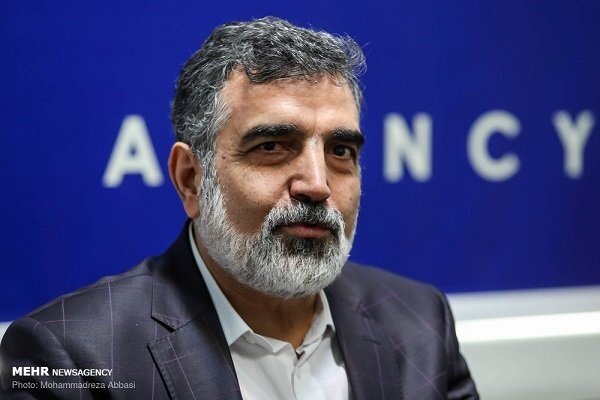
Speaking to local Iranian media in a recent interview, Behrouz Kamalvandi, spokesperson for Iran’s Atomic Energy Organization (AEOI) said that "We are facing a complex situation. Iran is cooperating with the Agency, yet the IAEA has not condemned the attack on Iran. Even Europe and the United States made no reference to the aggression against our facilities in the latest resolution."
He added that "the fundamental problem is that the Agency is pursuing an entirely political approach instead of acting in a professional and technical manner."
Kamalvandi explained that "the Safeguards Agreement was not designed for wartime conditions and does not meet the requirements created by the US–Israeli aggression against Iran. It therefore needs to be revised." He further noted that "there are various ways to ensure that Iran’s nuclear program does not deviate, and we can reach an appropriate framework with the IAEA to achieve this."
He emphasized that Iran is a strong country with significant natural resources, energy capacity, human capital, and a strategic location; factors that prevent others from taking action against it. "Iran will continue moving forward with strength despite mounting pressure and will not allow its power, particularly its nuclear capability, to be weakened," Kamalvandi said, calling the defense of that capability "a shared responsibility of both the government and the people."
According to Lebanese Al-Mayadeen, which reported about Kamalvandi's interview, tensions between Iran and the IAEA escalated sharply after "Israel" launched airstrikes on Iranian nuclear facilities on June 13, 2025, followed by US strikes on June 22. Iranian officials accused the IAEA of failing to condemn these attacks and of enabling them by sharing sensitive facility data with aggressor states.
In response, Iran’s Parliament backed emergency legislation to suspend cooperation with the IAEA. By July, President Masoud Pezeshkian had issued an official decree ending Iran’s active collaboration, and all IAEA inspectors were ordered to leave the country.
A temporary diplomatic breakthrough came in September, when Iran and the IAEA signed the Cairo Agreement, mediated by Egypt, to restore limited inspections under new conditions. The deal included a critical clause that limited inspections to those approved by Iran’s Supreme National Security Council
On November 19–20, 2025, the IAEA Board of Governors adopted a resolution that reignited hostilities. The resolution demanded immediate access to bombed sites and clarity on enriched uranium. It passed with 19 votes in favor, 3 against (Russia, China, and Niger), and 12 abstentions.
Collapse of the Cairo Agreement
Tehran condemned the move as "politically motivated" and accused the IAEA of failing to acknowledge Iran’s continuous cooperation or to condemn the criminal aggression by the US and "Israel."
As a result, Iran formally terminated the Cairo Agreement and informed IAEA Director General Rafael Grossi that it was "no longer in force".
Despite these tensions, Iranian officials, including Foreign Minister Abbas Araghchi and AEOI Chief Mohammad Eslami, reaffirmed that Iran’s nuclear program remains peaceful and continues under the Non-Proliferation Treaty (NPT) framework, albeit under a more restricted and nationally controlled inspection policy.
MNA





Your Comment