


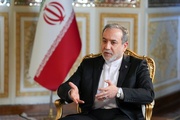
Speaking in an exclusive interview with Tehran-based “IRAN” newspaper, Iran’s top diplomat outlined a two-day proposal to reopen the Strait of Hormuz and initiate final negotiations with the United States, emphasizing that any agreement with the United States must be honorable, sustainable, and prevent a return to war.
Araghchi revealed that Tehran had presented the streamlined proposal to accelerate the diplomatic process, following an earlier seven-day framework.
Under the proposed plan, the United States would fulfill its required commitments on the first day, and Iran would reopen the strategic waterway on the second day, paving the way for final negotiations.
Araghchi noted that this framework remains a viable basis for dialogue, but stressed that Tehran first requires an explicit declaration of US readiness for an agreement and the implementation of tangible confidence-building measures.
Washington has not responded to our proposal and must change its stance if it is serious about reaching an agreement, he said, adding that the Strait of Hormuz will remain closed until the United States meets the seven conditions put forward by Iran.
"If Iran's demands are met, the Strait will be reopened, and Tehran is prepared to negotiate the details of how these conditions will be implemented," the foreign minister stated.
Addressing the current geopolitical climate, Araghchi pointed to differing viewpoints within the US regarding war, negotiation, and the continuation of economic pressure.
Exchanges of messages via mediators remain ongoing between Iran and the US and the memorandum of understanding reached in Islamabad is no longer on the table, the Iranian foreign minister maintained.
He described the "no war, no peace" status quo as undesirable, asserting that Iran is seeking a good, honorable, and sustainable agreement.
He clarified that such a deal must prevent a recurrence of conflict and should not involve concessions that the opposing side could falsely portray as a political victory.
Regarding Iran’s stockpiles of 60% enriched uranium, Araghchi stated that while a fair formula can be reached, the material will not be exported from the country.
He emphasized that this issue must be addressed within a comprehensive package that strictly respects Iran’s national interests.
He also confirmed that Iran’s official nuclear doctrine remains unchanged, despite ongoing discussions in expert circles.
On Iran’s nuclear doctrine and possible reconsideration of its membership in the Nuclear Non-Proliferation Treaty (NPT), Iran's top diplomat described the issue as a serious strategic debate involving valid arguments on both sides. However, he stressed that Iran’s official nuclear doctrine has not changed, while supporting further expert-level discussion of the matter.
Araghchi said Tehran wants to end the current state of neither war nor peace through an honorable agreement that does not undermine the country's dignity or sacrifice the gains made through its resistance during the war. He emphasized that any agreement would involve reciprocal concessions but must protect Iran’s national interests.
He also said regional countries oppose a prolonged war and favor lasting peace, rejecting the notion that they would support continued economic pressure and a blockade against Iran. He identified regional cooperation, inclusive security and economic development as essential foundations for sustainable peace, arguing that regional countries should not rely on foreign military forces to guarantee their security.
The foreign minister confirmed that messages and proposals continue to be exchanged between Tehran and Washington through mediators in Qatar and Pakistan, a process that remains under the strict supervision of Iran’s responsible authorities.
MNA











Your Comment