


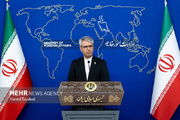
Speaking in his weekly press briefing on Monday, he emphasized that both the United States and Israeli regime are the root causes of the insecurity in the West Asia region.
In the beginning, he commemorated Aban 13 (Nov. 03) which marks the US Embassy Takeover by the followers of Imam Khomeini (RA) Line, and honored the name and memory of martyrs, adding, “The epicenter of the developments in West Asia region remains occupied Palestinian territory and the ongoing genocide there. Fundamentally, we all know that the Zionist regime and the United States are the root causes of all insecurity in the region."
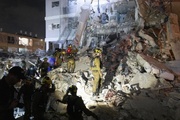
Following the elections in the Zionist regime, atrocities against Lebanon and Gaza have intensified. As the cold season approaches, the plight of displaced Palestinian displaced people has become catastrophic. The international community has fallen into a state of numbness; a dangerous phenomenon has emerged: the normalization of mass killing.
All institutions, including the Organization of Islamic Cooperation (OIC), have a responsibility to take a stand against these crimes. Officials of the Zionist regime are subject to prosecution, but the International Criminal Court is under intense pressure from the United States, he underlined.
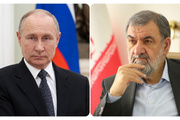
Commenting on a letter sent by US Vice President JD Vance to Secretary of Iran’s Supreme National Security Council (SNSC) Major General Mohsen Rezaei, Baghaei said differences in correspondence styles are normal, but what matters to Tehran is Washington’s actual conduct.
He said the US has so far demonstrated that it not only lacks any diplomatic initiative but also undermines diplomatic efforts. Over the past two years, Washington has consistently pushed for war, destroyed diplomatic processes, or sabotaged initiatives that had emerged through dialogue, he added.
Iran has put forward a seven-day initiative and heard the other side’s views, with concerns and considerations exchanged between the parties, he explained.
Tehran’s proposal for the diplomatic process remains on the table, he added, stressing that “the ball is in America’s court” and Iran’s demands have been clearly communicated.
“The Strait of Hormuz cannot reopen unless the blockade ends and Iran’s demands are met,” Baghaei stated, adding that only then could the parties discuss the continuation of the diplomatic process.
He noted that the diplomatic process is still underway and that negotiations are based on Iran’s seven-stage proposal, which has been condensed into a format that could be implemented within two days. He described the arrangement as a demonstration of Iran’s goodwill, emphasizing that its outcome depends entirely on the United States.
Asked about the two-day proposal, the visit by a Qatari delegation to Tehran, the Iranian deputy foreign minister’s trip to Doha, and the outcome of mediation efforts, the spokesman said the deputy foreign minister’s visit to Qatar had been aimed at facilitating transactions between Iran and Qatar.
He added that discussions are continuing and the issues involved are highly complicated. The passage of time has added to those complexities, while exchanges of messages between the parties are still ongoing, the spokesman said.
“You cannot speak of security while maintaining a blockade against Iran, nor can you expect Iran to make unilateral commitments,” he reminded the US, describing Tehran’s insistence that its demands be implemented first as a reasonable approach to restoring security.
Iran warns against ‘very dangerous’ normalization of Israeli crimes and killings in Palestine
The spokesman for Iran’s Foreign Ministry warned against the normalization of Israeli crimes and killings in Palestine, saying the continued genocide and occupation remain the root causes of insecurity and instability in the region.
Baghaei slammed inaction by European countries and the international community in the face of Israel’s escalating crimes against people in Gaza and Lebanon following the regime’s elections.
“We are facing an extremely dangerous phenomenon which is the normalization of crime and killing… Every [Palestinian’s] life lost means the destruction of a human life,” he said.
Baghaei emphasized that the United Nations and regional and international bodies, particularly the Organization of Islamic Cooperation (OIC), had a responsibility to speak out against the Israeli regime’s crimes.
Iran Parliament Speaker Ghalibaf undertakes the responsibility of the negotiations between Iran and US.
Regarding the two-day initiative, the presence of a Qatari delegation in Tehran, the visit of an Iranian Deputy Foreign Minister to Qatar, and the outcome of the mediation efforts, he stated, "The Deputy Foreign Minister’s trip to Doha was aimed at facilitating transactions between Iran and Qatar, and Deputy Foreign Minister for the Legal and International Affairs Kazem Gharibabadi was also present."
The ball is in the US court and the United States has to decide, he said, adding, “We reflected everything that was necessary to the American side in the usual format. The implementation of these demands is necessary for the return of security.”
There is also no change regarding the composition of the negotiating team, he said, noting, “General Mohsen Rezaei has provided an explanation, and the Supreme National Security Council (SNSC) is managing the process. Everyone has a defined role and position within the SNSC, and Parliament Speaker Ghalibaf serves as our negotiator. Thankfully, there is a level of cohesion among the decision-makers that is truly unprecedented.”
In response to allegations by Germany, Canada, and Australia that Iran seeks to take action against Jews, Baghaei stated, "The accusation of antisemitism does not apply to Iran. This is a European phenomenon that has no connection to Iranian religion or culture. They keep repeating this charge, and, unfortunately, the media propagates it. In fact, Iranians are the people who treat Jews with the greatest kindness."
The United States is the greatest threat to the non-proliferation regime.
In response to a question regarding Trump’s threat to attack Iran’s remaining nuclear facilities, Baghaei stated, "We certainly speak out, and we certainly document instances of gross human rights violations; however, experience has taught us that the world is all talk."
“We regret that the United Nations and the Agency’s Board of Governors remain silent in the face of such threats. The United States is, in truth, the greatest threat to the non-proliferation regime.”
‘Surrender’ has no place in Iranian nation’s lexicon
The spokesman for Iran’s Foreign Ministry further rejected remarks by US officials suggesting that Iranians would soon be forced to surrender, saying the word has no place in the Iranian nation’s vocabulary.
“What does this kind of language even mean? The word ‘surrender’ is simply not in our lexicon,” Baghaei emphasized.
Baghaei stressed that Iran had not been and would not be deceived because it was not its first experience in dealing with US officials.
He said Tehran judged Washington by its actions on the ground rather than its rhetoric.
He added that while Iran monitors various views and voices, the US government’s concrete action remained the decisive factor.
“Contradictory positions and double standards are, above all, indicative of deep confusion within their own governing structure,” the spokesperson emphasized.
Countries should not allow their territory to be used against Iran.
In response to claims made by Emirati official Anwar Gargash, the Foreign Ministry spokesperson emphasized, “It is not Iran that has destroyed trust; one cannot remedy a situation brought about by one’s own actions, and they must abandon the misguided approaches of the past.”
Iran cannot remain silent or fail to respond when the territory of regional states is used against it. Unfortunately, some of these countries not only failed to prevent this but actually encouraged it.
“Trust requires reciprocal action. We harbor no hostility toward any country in the region; we believe that regional nations should cooperate, and we expect them to ensure that their territory is not explo
American society is fed up with the parasitic behavior of the country's officials.
In response to US threats, he added, "Every act of deception involves two parties: the deceiver and the deceived. We will not be deceived; fully aware of what has transpired over the past two years, we take everything into account. While there may be differing voices within the US ruling establishment, American society itself is weary of the parasitic behavior of its officials. It is, therefore, not implausible that some within the US establishment might argue that America is squandering its wealth on a party whose only activity in our region is the commission of crimes.”
“Iran has remained mindful of these various perspectives, and it is the actual conduct of the United States that matters to us. These contradictory claims leave the international community bewildered: with whom, exactly, should one engage in the United States? Do all roads lead to Tel Aviv? This is a question that the United States must answer."
Iran rejects transfer of enriched uranium abroad
When asked about the possibility of uranium being removed from the country, Baghaei replied, "No."
Commenting on calls for Iran to withdraw from the Nuclear Non-Proliferation Treaty (NPT), Baqaei said that, in light of developments over the past 15 years, the Iranian people have a legitimate question about why the other side continued to seek excuses despite Iran’s repeated efforts to demonstrate the peaceful nature of its nuclear program.
He pointed out that the opposing side has assassinated the martyred Leader of the Islamic Revolution, Ayatollah Seyed Ali Khamenei, who had issued a religious decree prohibiting the production and use of nuclear weapons.
Baqaei stressed that Iran’s nuclear program has always been and remains peaceful, adding that the other side’s persistent claims that Iran poses a threat have fueled the debate, as if those making such allegations are deliberately turning a blind eye to reality.
He acknowledged that the question of withdrawal from the NPT is a genuine issue under discussion, but emphasized that, at the decision-making level, Iran remains a member of the treaty and considers itself bound by its commitments.
Addressing claims made by the Kuwaiti government against Iranian nationals, the Foreign Ministry spokesperson said, "These accusations are categorically rejected. We call upon the Kuwaiti government to cease the harassment of its own citizens for expressing sympathy toward Iran. The allegations leveled against Iran are entirely baseless. We remain committed to the principle of good neighborliness."
Regarding the Foreign Ministry's plans to revive regional meetings, he noted, "Over the past year, we have utilized several significant opportunities, including the Shanghai Cooperation Organization summit. Recent developments have not caused us to lose sight of the importance of regional processes."
MNA/TSN6997220





Your Comment