


In the wake of the June aggression, Iran has sought to redefine its image on both military and diplomatic fronts. Precision missile strikes that swiftly halted attacks demonstrated Tehran’s defensive capabilities, while the recent “International Law Under Assault: Aggression and Defense” conference showcased the country’s efforts to assert its legal and diplomatic stance on the global stage. Together, these actions paint a picture of a nation determined to defend its sovereignty and rights through both force and reasoned engagement.
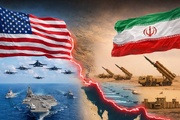
In June, Israel launched a sudden strike on Iranian territory just days before the sixth round of nuclear negotiations in Muscat. The attack, which killed over a thousand people including military commanders and civilians, and targeted peaceful nuclear facilities, was quickly followed by US bombings on Iranian nuclear sites. The coordinated aggression, Tehran says, violated multiple principles of international law. In response, the Iranian Armed Forces conducted precise retaliatory operations, striking strategic targets across occupied territories and at the Al-Udeid Air Base in Qatar, the largest US military facility in West Asia. Iranian officials stress that the swift and effective response transformed demands for “unconditional surrender” into a call for a ceasefire within several days.
Since the June aggression, Iranian military officials have consistently underscored the country’s readiness to respond decisively to any potential attacks. Highlighting lessons learned from the 12-day confrontation, they stressed that Iran’s defensive capabilities have significantly improved, ensuring a far stronger deterrent than during the June conflict. This enhanced readiness, they say, reinforces Tehran’s ability to safeguard its sovereignty and respond effectively to threats.
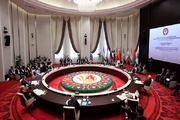
Yet Iran’s approach in defending itself is not solely military. The country’s diplomatic apparatus has been actively engaging on multiple fronts to assert its rights and safeguard national interests. This dual strategy was on full display at Sunday’s international conference, “International Law Under Assault: Aggression and Defense,” held in Tehran, where senior diplomats, legal experts, and international scholars discussed the June attacks, challenges to global legal norms, and the broader implications for regional and international security.
The conference, held at the Institute for Political and International Studies affiliated with Iran's Ministry of Foreign Affairs, brought together 350 Iranian and international participants, including diplomats, scholars, legal experts, and representatives from think-tanks across the world. Four specialized panels discussed the Israeli and US aggression against Iran, threats to the Non-Proliferation Treaty (NPT), and regional security arrangements.

Speaking at the conference, Iranian Foreign Minister Abbas Araghchi warned that international law is under an unprecedented assault, blaming the US and its allies for promoting a “force-based international order” at the expense of legal norms. Speaking at the conference, he said, “Today, we stand before a truth that can no longer be ignored: international law is under attack. The world faces profound challenges, alarming trends, and unprecedented strategic shifts.”
Araghchi criticized the so-called “rules-based international order,” arguing it serves Western interests selectively and has been used as a tool for US hegemony. He also described Israel as an agent of US policy in West Asia, asserting that its attacks, including the June 13 strike on Iranian territory just before the sixth round of nuclear negotiations in Muscat, violated fundamental principles of international law, UN provisions, and the safeguards and non-proliferation regime.
Foreign Minister Araghchi also underscored Iran’s strengthened defensive capabilities since June. “If a similar war occurs again, we are better prepared to respond. This preparedness is itself the strongest factor preventing future conflict,” he said. He further highlighted that Iran’s nuclear program remains resilient and fully compliant with its rights under Article 4 of the NPT, and all technical obligations have been met under IAEA supervision.

Speaking on the sidelines of the Conference, Deputy Foreign Minister Saeed Khatibzadeh emphasized that any potential talks with the US would be “armed negotiations,” highlighting Iran’s distrust and preparedness to counter possible deception. He stressed that negotiations under coercion or military threat cannot be impartial and that Iran’s approach combines caution with readiness.

Speaking at a panel during the conference, Mohammad Eslami, head of the Atomic Energy Organization of Iran (AEOI), blamed Israel for misusing confidential IAEA information during its precision strike on Iran’s nuclear facilities, targeting the lab room developed in cooperation with the agency. He warned that such misuse undermines the credibility and effectiveness of the IAEA.
He affirmed that Iran’s course has been transparent from the beginning and that the country will continue its activities despite external pressures.
Iranian officials, including Deputy Foreign Minister Kazem Gharibabadi and Kamal Kharrazi, a senior advisor to the Leader, called on the US to recognize that peace cannot be achieved by force. They reiterated Iran’s commitment to negotiations based on equality, mutual respect, and national interests, rejecting coercion, economic pressure, and unilateral threats.
Araghchi and other officials highlighted that Israel’s aggression, supported by the US and some European allies, has not only failed to achieve its objectives but has reinforced Iran’s national cohesion, deterrent capabilities, and commitment to peaceful diplomacy. The conference concluded that while Iran remains open to dialogue, it will continue to strengthen its defensive and nuclear capacities to safeguard its sovereignty and rights under international law.
Through a combination of strengthened defensive capabilities and proactive diplomacy, Iran seeks to convey a clear message: while it remains committed to dialogue and international law, it will firmly defend its sovereignty and national interests against any threats. The events of June and the discussions at Tehran’s conference underscore a nation determined to balance resilience with strategic engagement on both the battlefield and the diplomatic stage.
Reported by Mohaddeseh Pakravan





Your Comment