

A plan drafted by Portugal has been delivered to Iranian officials, but no funding has been approved yet.
Portugal is also interested in participating in the project, but Iran wants Iranian experts to implement it by themselves.
“According to officials of Iran’s Cultural Heritage and Tourism Organization and the Foreign Ministry, Iranian experts will restore the castle without the involvement of Portugal’s experts,” Hormozgan Cultural Heritage and Tourism Department (HCHTD) deputy director Kamran Musavi said on Tuesday.
“The implementation of the plan will require several billion rials (several million dollars), which the HCHTD is not able to provide from the provincial fund. We asked for national funding one year ago, and received some promises that have still not been fulfilled,” he added.
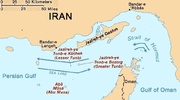
The castle was built by Portuguese commander Alfonso de Albuquerque when his forces seized the island in the early sixteenth century. The fact that such an important place was in foreign hands was so galling to Safavid king Shah Abbas I (1587-1629) that he eventually convinced the British East India Company to allow its ships to cooperate with his land forces and wrested the island from the Portuguese in 1622.
The castle built by the Portuguese on Hormoz Island is without doubt the most impressive colonial fortress in Iran. Constructed of reddish stone on a rocky promontory at the far north of the island, the castle was originally cut off from the rest of the island by a moat, traces of which still remain. Although most of the roof caved in long ago, much of the lower part of the very substantial outer walls is intact, with the remains lying on different levels of the site.
Over the past few years, the HCHTD has made many efforts to convert the castle into a site-specific museum to house and display the artifacts from over one hundred years of Portuguese colonial rule in the Persian Gulf.
The Portuguese also left three other castles on the Iranian islands of Larak and Qeshm and in the port of Kong as legacies of their colonialism in the Persian Gulf.
In September 2004, the castles hosted celebrations commemorating the liberation anniversary of the castles.
MMS/HG
END
MNA












Your Comment