

Judge Juan Jose Galeano, who is presiding over the case of the AMIA bombing in
MP Hamid-Reza Haji-Babaei, a member of the Majlis National Security and Foreign Policy Commission, said Saturday that the failure of the Middle East road map has prompted the triangle of evil, comprising Israel, the U.S., and Britain, to hatch a new plot against Iran by accusing Tehran of being involved in the bombing of a Jewish center in Argentina in 1994.
Referring to the British cooperation with the
The Zionist lobby has tried to externalize its domestic problems by formulating a new strategy to exert more pressure on the Islamic Republic, the MP told the Mehr News Agency.
MP Kazem Jalali also said the accusations against Soleimanpour are tantamount to accusations against the Islamic Republic of Iran and should be dealt with accordingly.
Jalali said that the arrest warrant issued for Soleimanpour is a violation of international law, adding that the baseless accusation is the product of a U.S.-Zionist plot against
It is probably not a coincidence that the warrant was issued shortly after the political crisis in
The lawmaker went on to say that the Zionist regime is the main element behind the recent plot, because it faces a deadlock in the Arab-Israeli peace process known as the
The crisis developed when Islamic Jihad and Hamas issued a joint statement on Thursday formally ending their seven-week-old truce, Jalali told the Mehr News Agency.
Referring to the
Another member of the Majlis Foreign Policy Commission, Hassan Qashqavi, said the arrest of the former Iranian ambassador is illegal.
The Zionist lobby’s pressure on
Given the current deadlock in the
British magistrates are currently examining the case and may decide to extradite
Following Soleimanpour’s arrest by British police, in the absence of the country's ambassador, the director of the Western European Affairs Department of the Foreign Ministry summoned the British charge d'affaires in
In this meeting the British charge d'affaires was told that the ruling by the Argentine court and Soleimanipour's arrest were a completely political affair fabricated by Zionist circles.
Gould was asked to tell the British government to avoid getting involved in the new plan that is being organized by Zionist circles and carried out by
The Foreign Ministry also highlighted the need for bilateral cooperation to resolve the issue and clear the Iranian diplomat of all charges.
Gould promised to convey the message to his nation's officials and said he would tell them to follow up the matter on a completely impartial basis.
The British charge d'affaires stressed that he would notify Iranian officials to inform them about British officials' response as soon as he received it.
The Foreign Ministry also on Saturday summoned Argentine Charge d'Affaires Ernesto Alvarez to inform him of
Director General of the American Affairs Department of the Foreign Ministry Mahdi Mohtashami voiced
Mohtashami also told Alvarez that as it has been announced time and again, the Islamic Republic of Iran totally rejects all the allegations raised against it in this scenario designed by Zionist agents to mar their bilateral ties.
He pointed to the Argentine government's indifference toward
He also informed Alvarez of Iran's decision to suspend economic and cultural cooperation with
Alvarez said he would immediately inform Argentina of Iran's strong protest and follow up the case.
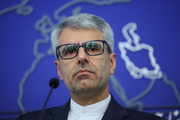
Foreign Ministry spokesman Hamid-Reza Assefi here on Friday condemned Soleimanpour's arrest.
"The measure is politically motivated and has been carried out under the influence of the Zionists. It is meant to serve the interests of the Zionist regime," said Assefi.
RA/MS/SM/HG
END
MNA







Your Comment