


About Shahab al-Din Suhrawardi and his Philosophy of Illumination:
According to information published on the Wikipedia website from different references, Shihāb ad-Dīn Yahya ibn Habash Suhrawardī (1154–1191) was a Persian philosopher and founder of the Iranian school of Illuminationism, an important school in Islamic philosophy. The "light" in his "Philosophy of Illumination" is the source of knowledge. He is referred to by the honorific title Shaikh al-ʿIshraq "Master of Illumination" and Shaikh al-Maqtul "the Murdered Master", in reference to his execution for heresy. Mulla Sadra, the Persian sage of the Safavid era described Suhrawardi as the "Reviver of the Traces of the Pahlavi (Iranian) Sages", and Suhrawardi, in his magnum opus "The Philosophy of Illumination", thought of himself as a reviver or resuscitator of the ancient tradition of Persian wisdom. Suhrawardi provided a new Platonic critique of the peripatetic school of Avicenna that was dominant at his times, and that critique involved the fields of Logic, Physics, Epistemology, Psychology, and Metaphysics.
His life spanned a period of less than forty years during which he produced a series of works that established him as the founder of a new school of philosophy, called "Illuminism" (hikmat al-Ishraq). According to Henry Corbin, Suhrawardi "came later to be called the Master of Illumination (Shaikh-i-Ishraq) because his great aim was the renaissance of ancient Iranian wisdom". In 1186, at the age of thirty-two, he completed his magnum opus, The Philosophy of Illumination.
Suhrawardi was a strong defender of Peripatetic philosophy, until he was influenced by those whom he described as those who "have traveled the path of God", like - as noted by Suhrawardi - Plato from the Greek tradition, Hermes (Thoth) from Egypt, and Pythagoras the Phoenician, and also figures in the Persian tradition. His philosophical project aims to revive the lost hikma of east and west.
Suhrawardi taught a complex and profound emanationist cosmology, in which all creation is a successive outflow from the original Supreme Light of Lights (Nur al-Anwar). The fundamental of his philosophy is pure immaterial light, where nothing is manifest, and which unfolds from the Light of Lights in a descending order of ever-diminishing intensity and, through complex interaction, gives rise to a "horizontal" array of lights, similar in conception to Platonic forms, that governs mundane reality. In other words, the universe and all levels of existence are but varying degrees of Light—light and darkness. In his division of bodies, he categorises objects in terms of their reception or non-reception of light.
Suhrawardi considers a previous existence for every soul in the angelic realm before its descent to the realm of the body. The soul is divided into two parts, one remains in heaven and the other descends into the dungeon of the body. The human soul is always sad because it has been divorced from its other half. Therefore, it aspires to become reunited with it. The soul can only reach felicity again when it is united with its celestial part, which has remained in heaven. He holds that the soul should seek felicity by detaching itself from its tenebrous body and worldly matters and access the world of immaterial lights. The souls of the gnostics and saints, after leaving the body, ascend even above the angelic world to enjoy proximity to the Supreme Light, which is the only absolute Reality.
Suhrawardi elaborated the neoplatonic idea of an independent intermediary world, the imaginal world . His views have exerted a powerful influence down to this day, particularly through Mulla Sadra’s combined peripatetic and illuminationist description of reality.
Suhrawardi's Illuminationist project had a strong influence on subsequent esoteric Iranian thought and the idea of “Decisive Necessity” is believed to be one of the most important innovations in the history of logical philosophical speculation, stressed by the majority of Muslim logicians and philosophers.
Suhrawardi was born in 1154 in Suhraward, a village located between the towns of Zanjan and Bijar Garrus in Iran.
Introduction to Zanjan
Located on the Commercial Silk road and on Iran–Europe transitway, Zanjan Province is 338 kilometers from Tehran and it is a strategic city in terms of connecting central parts, the west, and northwest of Iran together.
Zanjan is a mountainous province whose climate is characterized by cold snowy weather in the mountains and a moderate climate in the plains in wintertime. In the summers, the weather is warm.
Zanjan, the World City of Filigree Work
Being designated as “world city of filigree” by the World Crafts Council, Zanjan is well known for its noble craftsmanship of filigree work.
Filigree consists of curling, twisting, or plaiting fine, pliable metal threads(especially silver)and soldering them at their points of contact with each other with a metal groundwork.
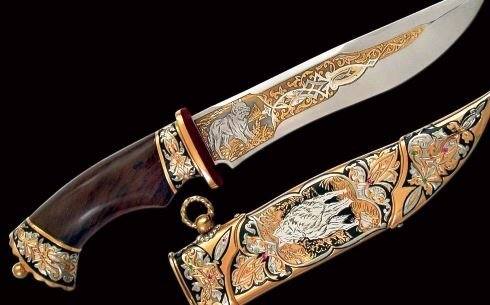
Handmade knives
Having fine patterns on their handle and lining, the stainless handmade knives of Zanjan are famous in Iran due to their cutting power, sharpness, high quality, durability, and plating style.
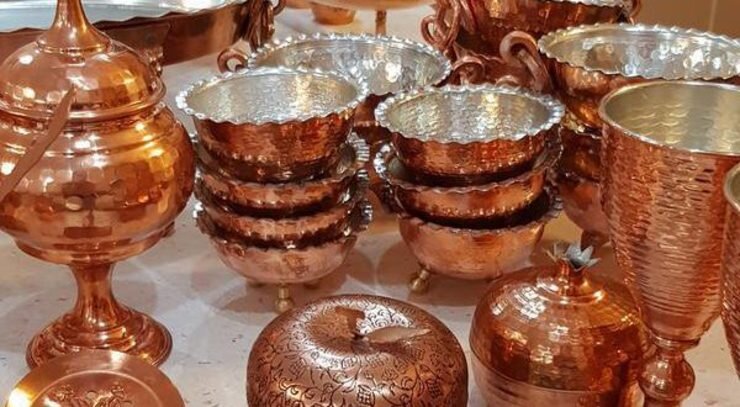
Coppersmith
The outstanding coppersmith craft has a long and shining history in Zanjan which is characterized by its specific motifs carved on a wide variety of copper products. The history of copper handicrafts in Zanjan dates back to more than a thousand years ago and to the Sassanid era.
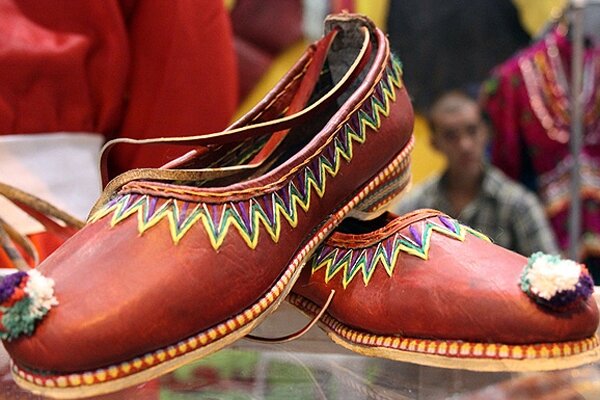
Traditional Charooq footwear
Made of leather, Charooq is a handmade shoe that used to be a type of footwear in Zanjan in ancient times, however today, these beautiful multicolored shoes have gained decorative usage among people. The Charooq footwear was also originated from the Soltaniyeh city of Zanjan in the Sassanid era.
When it comes to tourist attractions, Zanjan is one of the best places in Iran whose nature, history, and culture attracts many tourist and travelers every year.
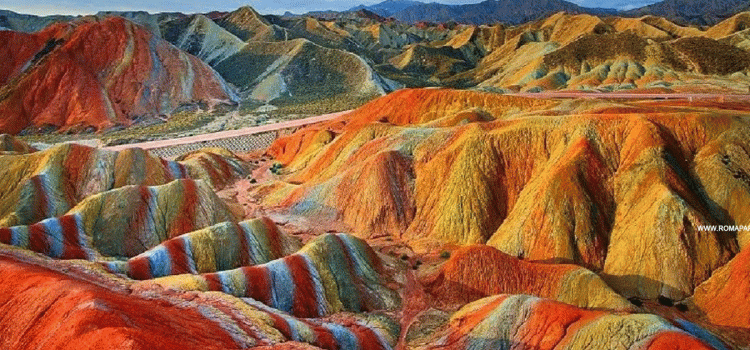
Colorful mountains of Mahneshan
While traveling to the western parts of Zanjan, the rare colorful mountains and clay hills in red, brown, green, orange, yellow, and white catch everyone's eyes.
The breathtaking scenery of these mountains is a good choice for photographers and mountain climbers as well.
Located in the Mahesheshan County of Zanjan, these amazing mountains are called “Ala Dagh Lar” by local people.
Dome of Soltaniyeh
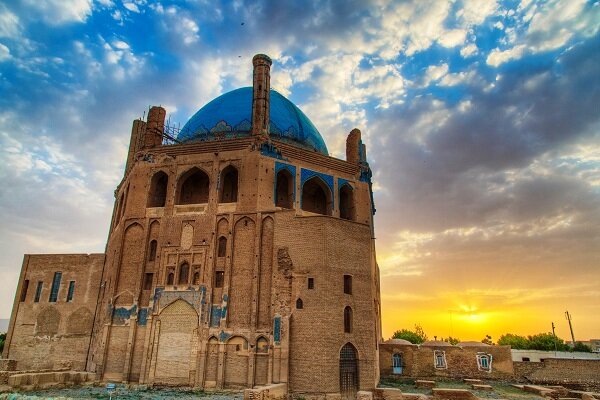
Dating back to 700 years ago, The Soltaniyeh Dome is one of the most exceptional and famous Islamic sites of the province that was built commissioned by Sultan Mohammad Khodabandeh (Oljeitu) in the old Soltaniyeh city of Zanjan, the capital of the Ilkhanid dynasty from 1302 to 1312.
The historical and magnificent edifice of the Dome of Soltaniyeh is the largest brick dome in the world and the world's third tallest dome which has been registered on the UNESCO World Heritage list in 2005.
Katalehkhor Cave
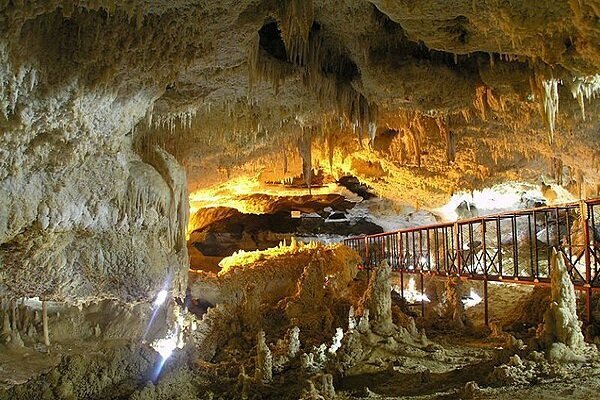
Dating back to the Jurassic period (120 million years ago), Kataleh Khor Cave in the 155 km southwest parts of Zanjan is one of the favorite destinations of the people who travel to Zanjan.
The formation of stalagmites and stalagmites through calcified precipitation, the suspended icicles from the roof as well as multi-colored conical-shaped hangings has added to the beauty of this cave.
In the larger passages, a constant trickle of water has brought about the presence of beautiful designs and notable shapes similar to a multi-colored cauliflower (due to the presence of calcified material, it resembles the same), whereas some of the crystals are clear.
Also, researchers have found a strange route in this cave which shows Katale Khor is connected to Ali Sadr Cave in Hamedan Province, at distance of 100km.
Zanjan Anthropological Museum (Rakhtshurkhaneh)
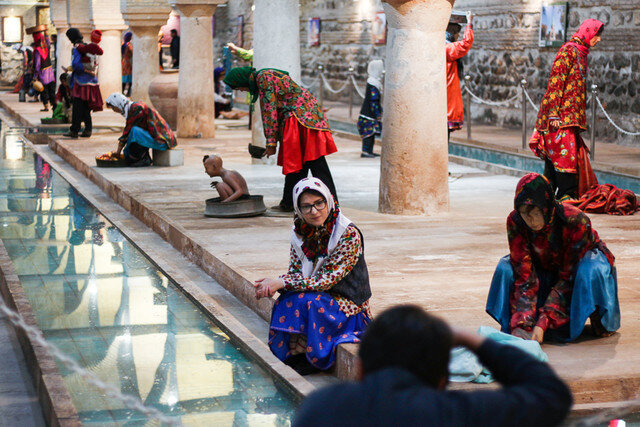
The historical building of Zanjan Wash House, locally dubbed as Rakhtshooy Khaneh lies at the historical texture of the Zanjan city which was built in nearly the 20th century in the Qajar Era.
Since there was no washing machine in ancient times, most people in Zanjan used to go to the river to wash their clothes and dishes. Therefore, a laundry house was built for women to wash their household clothing in a closed space during the harsh winters of that time for free.
Currently, Rakhtshooy Khaneh has changed into an anthropological museum where you can find the sculptures of the people of Zanjan in ancient times. These sculptures are holding their washing equipment and they have dressed up in the local clothes of Zanjan people in old times.
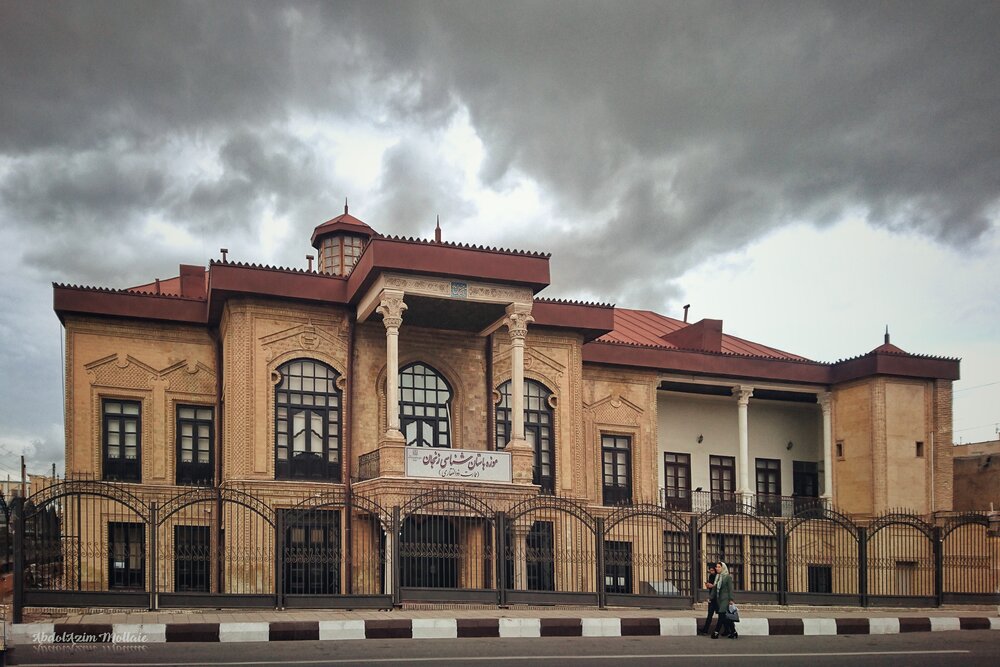
Archaeology and Salt Men Museum (Zolfaghari Mansion)
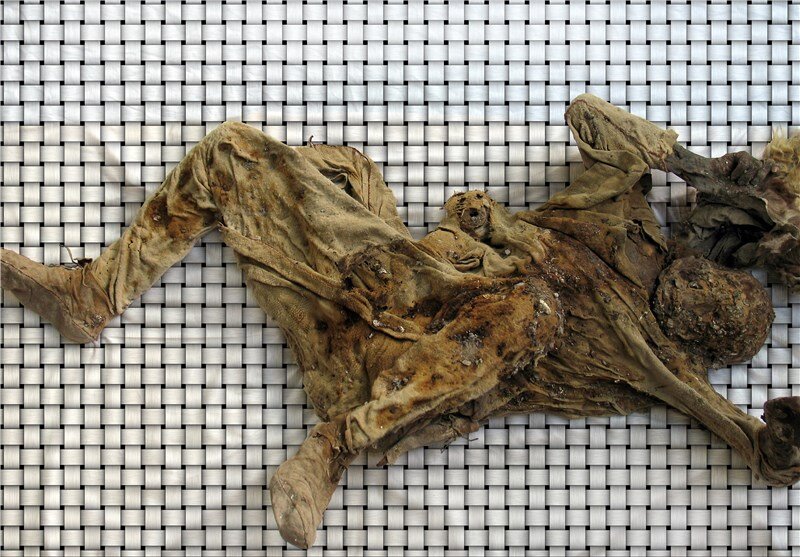
In 1993, 6 mummies found in Chehrabad Salt Mine in Southern Zanjan. Salt cured mummies (dated back to Achaemenid and Sassanid periods ) were in fact ancient corpses killed or crushed in the cave and mummified by the extreme conditions and their Hair, flesh, and bone were all preserved by the dry salinity of the cave, and even internal organs such as stomachs and colons have been found intact.
One of the mentioned salt men has been transferred to the National Museum of Iran in Tehran (all can be seen by the public), the final salt man remains in-situ, half stuck in a mountain of salt.
The other four salt-cured mummies are kept in the Zanjan Archaeology Museum, known as Zolfaghari Mansion, in the center of Zanjan city along the northern side of Sabzeh Meydan square.
Historical Bazaar of Zanjan
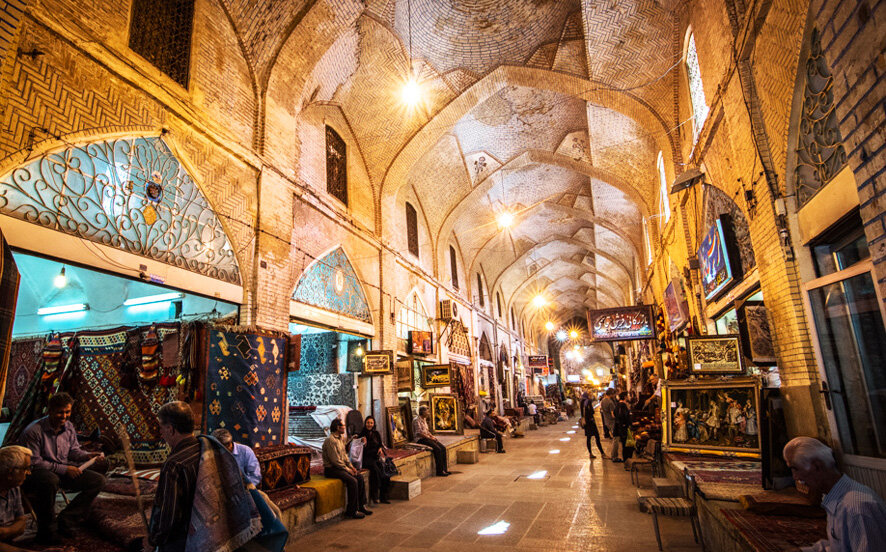
The traditional bazaar of Zanjan is the longest covered market in Iran which was founded in 1784 under the command of Aqa Mohmmad Khan Qajar and was completed in 1792.
The bazaar consists of two parts, namely Bazaar-e Bala (upper bazaar) and Bazaar-e Paieen (lower bazaar), which are divided into different sections by professions and commodities.
Two mosques, namely Aqa Sheikh Fayyaz Mosque and Mirza Mosque, two caravansaries of Serai Malek, and Serai Golshan as well two public baths also exist in this bazaar.
Reported and compiled by Marzieh Rahmani

Your Comment