

Soltanieh, the mausoleum of Oljaitu, was constructed from 1302 to 1312 in the city of Soltanieh, the capital of the Ilkhanid dynasty, which was founded by the Mongols.
Situated in Zanjan Province, Soltanieh is one of the outstanding examples of the achievements of Persian architecture and a key monument in the development of its Islamic architecture. The octagonal building is crowned with a dome 50 meters in height covered in turquoise blue faience and surrounded by eight slender minarets. The mausoleum is the tallest dome in the Islamic world.
It is the earliest existing example of the double-shelled dome in Iran. The mausoleum’s interior decoration is also outstanding and scholars such as A.U. Pope have described the building as “anticipating the Taj Mahal.”
“After an expert of the International Council on Monuments and Sites (ICOMOS) read his report on the Soltanieh Dome, members of the World Heritage Committee registered the Soltanieh Dome on the Cultural Heritage List without any vote against the dossier,” Ahmad Jalali, the ambassador and permanent delegate of the Islamic Republic of Iran to UNESCO said on Friday.
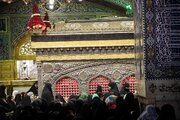
The people visiting Soltanieh on Friday celebrated the occasion after the news was announced through placards posted on walls by officials of Soltanieh, who entertained people with confections and free admission to the site.
“People are happy about the event. Many tourists and local people spend their weekends at Soltanieh, but they rushed to take part in the celebration after they were informed of the news on this occasion,” monument guide Hossein Heydari told the Persian service of the Cultural Heritage News (CHN) agency.
“I’m happy to hear the news, but I was surprised that such a great monument had not been registered on the list already… The monument has been renovated in such a way that allows unprofessional visitors to distinguish original sections from restored sections,” said Faranak Ahmadi, who was visiting the monument for the first time.
“Unfortunately, Soltanieh suffers from some scratches made by uneducated people who don’t understand the significance of such a monument. Officials must protect the monument from such damage,” she added.
Chogha Zanbil (Khuzestan Province, 1979), Persepolis (Fars Province, 1979), Naqsh-e Jahan Square (Isfahan Province, 1979), Takht-e Soleiman (West Azarbaijan Province, 2003), Pasargadae (Fars Province, 2004), and the city of Bam and its Cultural Landscape (Kerman Province, 2004) are the other Iranian monuments and sites that have been registered on the World Heritage List over the years.
World Heritage Committee, Jahan-Nama Tower dispute
The World Heritage Committee also gave Iranian cultural officials a six-month grace period in the matter of modifying the recently constructed Jahan-Nama Tower, which spoils the horizontal view of the Naqsh-e Jahan Square in Isfahan. The 56-meter tower is located near the Darvazeh-Dowlat neighborhood and covers an area of 16,000 square meters.
Iran’s Cultural Heritage and Tourism Organization (CHTO) must present its report to the committee on actions that will be carried out for the modification of the tower by January 31, 2006. Otherwise, the monument will automatically be registered on the UNESCO List of World Heritage in Danger.
At its 28th session held on July 1, 2004 in the eastern Chinese city of Suzhoui, the committee had called for the modification of the tower.
UNESCO had determined that the height of the tower on its eastern side should be reduced by 12 meters and the height of its western side by 24.48 meters.
The Isfahan City Council and officials of the Isfahan Municipality had previously said that they “would not permit any foreign organization to make decisions about their city”, although an Iranian court had issued a ruling calling for modification of the building at the request of the CHTO.
Despite the persistence of the city council, its chairman announced on July 12 that they had reached an agreement on the modification of the Jahan-Nama Tower.
Additions to UNESCO World Heritage List
Museum-City of Gjirokastra from Albania, Qal'at al-Bahrain from Bahrain, Complex of the Radziwill Family from Belarus, Plantin-Moretus Complex from Belgium, Mostar Bridge from Bosnia and Herzegovina, Humberstone and Santa Laura Saltpeter Works from Chile, Historic Centre of Macao from China, Urban Historic Centre of Cienfuegos from Cuba, Le Havre from France, Biblical Tells Megiddo, Hazor, and Beer Sheba, and Incense Route/cities in the Negev from Israel, Syracuse and the Rocky Necropolis of Pantalica from Italy, Osun-Osogbo Sacred Grove from Nigeria, Historical Center of the City of Yaroslavl from the Russian Federation, Kunya-Urgench from Turkmenistan, and the Struve Geodetic Arc which belongs commonly to Belarus, Estonia, Finland, Latvia, Lithuania, Norway, Republic of Moldova, the Russian Federation, Sweden, and Ukraine are the other monuments and sites that were registered on the World Heritage List during the Friday session.
The 29th Session of the World Heritage Committee ends tomorrow.
MMS/HG
End
MNA






















Your Comment